

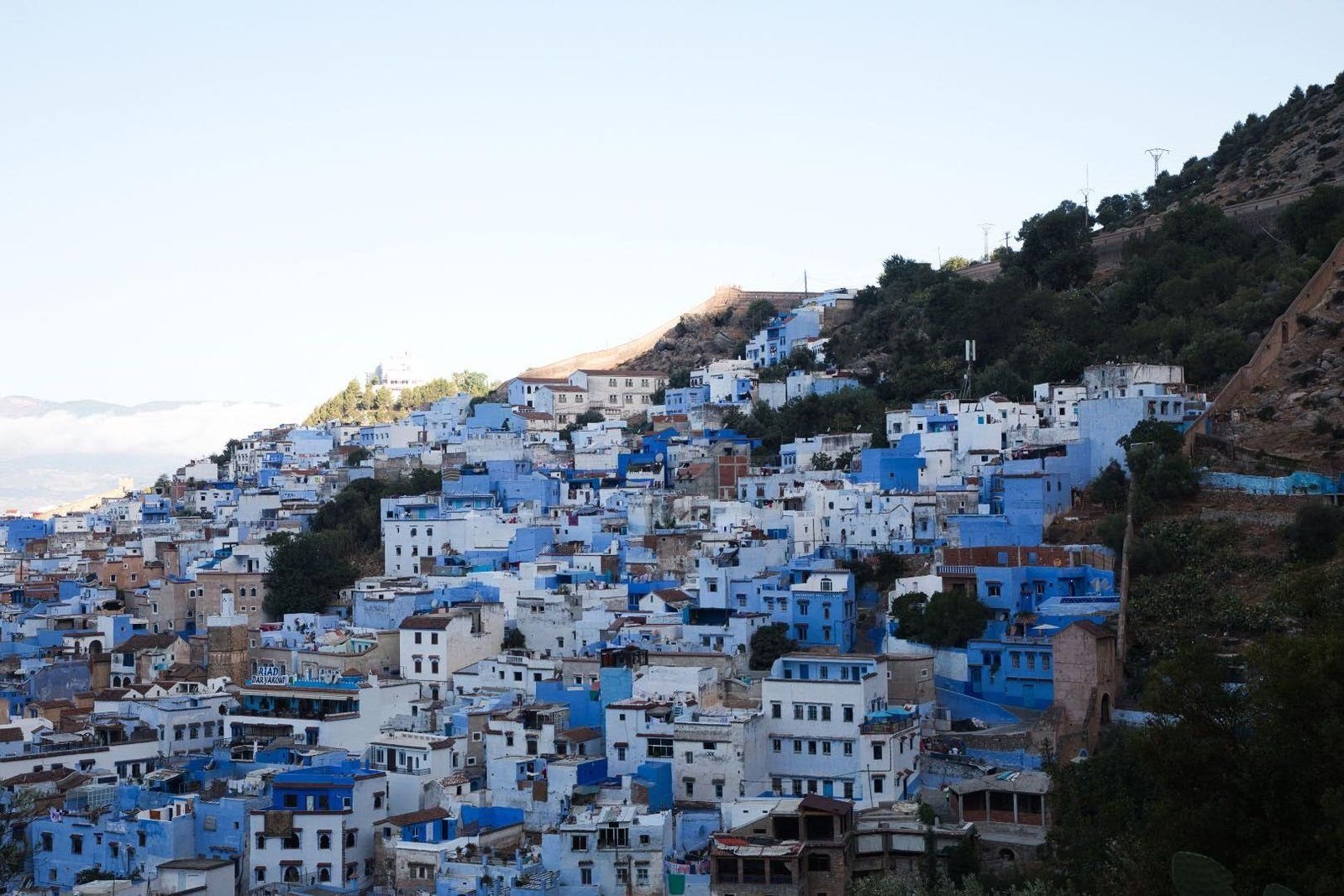
Chefchaouen’s blue-washed rooftops beneath the Rif Mountains, about two hours from Tangier.
Is Chefchaouen worth visiting? Yes, if you give it more than a quick photo stop. Set among the Rif Mountains in northern Morocco, the town is known for its blue-painted medina, but its appeal is just as much in the quieter moments: early light on an empty lane, tea beside the spring and a sunset walk above the rooftops.
The difference between a rushed visit and a rewarding one is time. Stay overnight, explore before the day-trippers arrive and leave room for the mountain landscape beyond the old town. Here’s how to plan a slower stay.
Why Chefchaouen feels different
Chefchaouen is a small mountain town, not a monumental imperial city. Its medina is compact enough to explore on foot, though its lanes climb and dip across the hillside. Blue-washed walls, tiled steps and wooden doorways make each turn feel distinct, while the Rif foothills are never far from view.
There are different stories about the origins of the blue paint, and no single explanation accounts for every shade or street. The colour is part of a lived-in place, not simply a backdrop: people shop, work and make their way home through these lanes. Take photographs thoughtfully and leave space for daily life to carry on. For an overview of the town, see Morocco’s official tourism guide to Chefchaouen.
Things to do in Chefchaouen, slowly
Wander the blue lanes before the town wakes up
The most memorable way to see the medina is to start early, before the busiest sightseeing hours. In the quiet of the morning, shopkeepers are opening up and residents are beginning their day; there’s more room to notice doorways, painted steps and the changing light.
The lanes around Plaza Uta el-Hammam are convenient, but they draw more visitors later on. For a calmer wander, follow the smaller uphill lanes away from the square and take side turns without trying to cover every corner. There’s no entrance fee, and comfortable shoes matter more than a map.
Pause in the Kasbah and its garden
At the edge of Plaza Uta el-Hammam, the Kasbah offers a change of pace from the surrounding souks. Its garden gives you a leafy pause, while the museum provides a little context about local history and culture. Allow around 30–60 minutes, depending on how long you like to linger.
There is a modest entrance charge, so carry some cash and check opening arrangements locally. The courtyard is a good place to take a breather before setting off through the medina again.
Follow the lanes to Ras El Maa
At the northeastern edge of the old town, Ras El Maa is a spring where water runs down from the hills. You’ll find small cafés nearby and old washing areas beside the stream. It’s a simple place to sit and watch the water rather than a formal attraction to rush through.
The short walk from the medina is free, although the route includes uneven paving and steps. Visit in the morning or later in the afternoon for a gentler atmosphere, and be mindful that people use this area as part of everyday life.
Walk up to the Spanish Mosque viewpoint at sunset
From near Ras El Maa, a path climbs to the Spanish Mosque viewpoint above town. The reward is a wide view across the blue rooftops and the surrounding Rif hills. Leave 45–60 minutes before sunset so you can walk at a comfortable pace, find a place to sit and make your way down before it gets properly dark.
The uphill walk takes roughly 20–30 minutes for many visitors, but allow longer if you prefer a slower climb or want to stop for photographs. It is free and moderately strenuous, with a rough, sometimes steep path. Wear shoes with grip and bring a small torch for the return.

Sunset over the blue medina, seen from the Spanish Mosque viewpoint above the town.
Browse the medina souks for Rif crafts
The souks are part of the town’s everyday rhythm as well as a place to shop. Look for woven blankets, pottery and other handmade goods, and take time to compare pieces rather than feeling you need to buy on the first visit. Smaller shops away from the busiest square can make for a more relaxed browse.
Browsing costs nothing; prices vary by item and shop. If you decide to bargain, keep it friendly and be ready to walk away politely if the price is not right.
Take a walk into the Rif hills
Chefchaouen is also a useful base for seeing more of the Rif beyond the blue lanes. You can choose a short walk on the town’s edge or arrange a longer outing to nearby countryside and villages. Routes, terrain and effort vary, so ask locally about current conditions and choose a walk that matches your fitness and the weather.
A short walk may be manageable without much preparation; for a longer village visit or route on unfamiliar trails, a local guide can help with navigation and context. Bring water, sun protection and suitable footwear. Morocco Unwind’s Rif Mountains walking experience near Chefchaouen can be discussed when planning a private itinerary.
The hillside at the edge of the Rif, where short walks and village trails begin above the medina.
Make time for a hammam or a slow café morning
Not every good day needs a viewpoint or a hike. Set aside an unhurried breakfast, order mint tea and watch the square come to life, or ask your accommodation about a local hammam. Hammam prices and styles vary, from simple neighbourhood baths to more visitor-oriented experiences, so check what is included before booking.
A café stop is generally low-cost to moderate, while hammam costs depend on the venue and services. Either makes a welcome pause after climbing the town’s many steps.
How long should you stay?
One night gives you an evening stroll and a quiet morning before you leave. It works if your route is tight, but leaves little time for the hills or a leisurely visit to the Kasbah and spring.
Two nights is our recommendation. You get one full day to explore at a relaxed pace, with time for both the medina and a sunset walk or short outing beyond town. Staying overnight also means you can see the lanes in the softer morning light and after day visitors have departed.
Three nights suits travellers who want to spend a full day walking in the Rif, visit a nearby village or simply slow down further. If you can spare the time, an extra night turns Chefchaouen from a picturesque stop into a restorative stay.
When to visit Chefchaouen
Spring (March–May) and autumn (September–November) are usually the most comfortable seasons for walking and exploring. Spring brings fresh green to the hills; autumn often has pleasant daytime temperatures and softer light.
Summer is warmer and can be busy, especially around the medina’s best-known spots. Start early, take a break during the hottest part of the day and save the uphill viewpoint walk for late afternoon.
Winter is quieter, but expect chilly evenings and the possibility of wet weather. The Rif receives more rain than Marrakech, so pack a light waterproof layer and allow flexibility for outdoor plans.
Getting to Chefchaouen
Approximate driving times are around two hours from Tangier, about four hours from Fes and roughly five hours from Casablanca. These are planning estimates rather than guarantees: traffic, stops, weather and road conditions can all add time. If you are arriving from Spain rather than flying in, our guide to the Spain to Morocco ferry compares the two main crossings and their fares. We break the drive down stage by stage, including where to stop, in our guide to the Tangier to Chefchaouen to Fes route. The mountain road is winding, particularly as you approach town.
A private car with a driver is often the easiest option, especially if you’re travelling with luggage or combining Chefchaouen with other stops. It gives you flexibility for breaks and makes it simpler to reach your accommodation. Buses can work, but require more planning around schedules and onward transport. For ideas on what to see before or after your visit, browse our guides to Tangier and Fes.
Where to stay
A riad or guesthouse inside or close to the medina lets you step out into the old town and enjoy it after the day visitors leave. The trade-off is that cars cannot reach most medina doorways, so you may need to carry your bags along narrow lanes or arrange help with luggage.
Staying outside the walls can mean easier vehicle access and parking, though you’ll have a walk or short ride to the medina. Before booking, ask whether the property has a terrace, heating for winter stays, and parking nearby. If you’re staying inside the medina, check how far the entrance is from the nearest vehicle drop-off point.
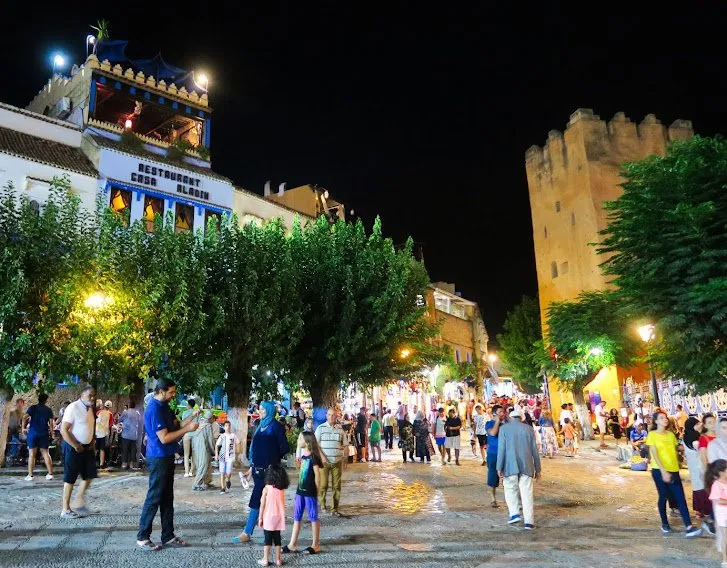
Plaza Uta el-Hammam after dark, when the day visitors have gone and the medina slows down.
Practical notes for a comfortable visit
- Wear comfortable walking shoes: the lanes are uneven, and many routes involve steps or steep climbs.
- Pack light if your accommodation is in the medina, where vehicles cannot reach every door.
- Dress modestly, particularly when visiting religious or community spaces.
- Ask before photographing people. A quiet doorway or shopfront may be someone’s home or workplace.
- Carry Moroccan dirhams for small cafés and shops; card payment may not be available everywhere.
- Bargain politely where prices are negotiable, and keep the exchange friendly.
Where Chefchaouen fits into a Morocco itinerary
Chefchaouen works naturally on a northern route between Tangier and Fes. Morocco Unwind’s 12-day Tangier to Marrakech private journey includes two nights in the Blue City before continuing through Fes, the Sahara and the High Atlas.
For a shorter northern circuit, the 7-day Imperial Cities and Blue City tour links Casablanca, Rabat, Tangier, Chefchaouen and Fes, with two nights in Chefchaouen and a free day to explore. Both are private journeys with a driver, and the pace can be adapted to suit your interests. If you prefer to build a route around the Sahara instead, see our realistic 10-day Morocco itinerary, and for the city legs of a trip, our local’s guide to the best things to do in Marrakech covers what to slow down for.
Is Chefchaouen worth visiting?
Yes, especially if you enjoy walking, mountain scenery and a slower pace. It’s most rewarding when you stay overnight rather than treating the medina as a brief photo stop.
How many days do you need in Chefchaouen?
Two nights is a good balance: you’ll have a full day for the medina, the spring and a sunset viewpoint. Add a third night if you’d like time for a longer Rif walk or village visit.
Is Chefchaouen safe?
Chefchaouen is a well-visited destination, but use the same common sense you would elsewhere: keep an eye on your belongings, take care on steep or uneven paths and follow local advice. If you’re walking in the hills, check conditions and daylight before setting out.
What is the best time to visit Chefchaouen?
Spring, from March to May, and autumn, from September to November, are generally the most comfortable for exploring on foot. The Rif can be wet and cool in winter, while summer is warmer and busier.
Can you visit Chefchaouen as a day trip from Tangier or Fes?
It is possible, but the drive and winding mountain road leave limited time in town, especially on a return trip the same day. For realistic drive times and how the day actually looks, see our northern Morocco route guide. Staying overnight lets you enjoy the medina in quieter morning and evening hours.
What should I wear in Chefchaouen?
Choose comfortable shoes with grip for the steps and uneven lanes, and dress modestly in public spaces. Bring a light layer for cool evenings or rain, particularly outside summer.
Chefchaouen is worth the journey when you let the town set the pace: an early walk, an afternoon without a checklist and a sunset over the Rif. If you’d like help fitting it into a private Morocco itinerary, tell us what you have in mind and we can shape a tailored plan, with a proposal sent promptly via WhatsApp or email.
Related tour: see our Fes and Chefchaouen Unwind: 4 Days from Fes, a slow private journey through the old medina of Fes and the blue lanes of Chefchaouen.