Unwind and Wellness Coast: 6 Days, Taghazout and Essaouira
6 days
$1,218
Tour typePrivate tour
Duration6 days, 5 nights
RouteMarrakech to Marrakech
StyleRiad and boutique hotels by the sea
StaffPrivate driver
Activity levelEasy, with gentle yoga and beach walks
- Private tour, never a shared group
- Private driver and vehicle
- Tailor-made to your dates
- Rated 5.0 on Tripadvisor
Overview
Yoga, hammam and sea air in six days
Looking for a Morocco wellness tour that really lets you slow down? This private 6-day coastal journey follows the Atlantic from the walled port of Essaouira to the surf village of Taghazout. Wake to sea air, stretch out in a yoga session, steam in a traditional hammam and spend unhurried afternoons on the beach or in the old medina. There are no early alarms and no long itineraries, just short scenic drives, hand-picked stays and plenty of time to rest. It is the Morocco Unwind idea in its purest form.
Duration6 days, 5 nights
StartsMarrakech
EndsMarrakech
StyleRiad and boutique hotels by the sea
TransportPrivate driver
Highlights
- Essaouira medina, ramparts and fishing port with a local guide
- Traditional hammam with scrub in Essaouira
- Argan oil cooperative stop on the way to the coast
- The Atlantic coast road from Essaouira to Taghazout
- Yoga sessions in Taghazout, a surf village by the ocean
- Free days for the beach, the sea or a spa treatment
- Sunset walks on the beach
- Short drives and a gentle pace
Is this tour for me?
At a glance
Physical effortEasy
Travel stylePrivate tour with a driver
Service levelRiad and boutique hotels by the sea
Physical ratingEasy, with gentle yoga and beach walks
PaceSlow, with free time on days 2, 4 and 5
Best forRest, sea air and a digital detox
Before you book
Who this tour suits
Good if you
- want a restful trip with sea air, yoga and a hammam
- prefer a slow pace with free time rather than a packed schedule
- enjoy walking on the beach and exploring a small coastal medina
- want a gentle introduction to Morocco
Think twice if you
- want the Sahara dunes or a night in a desert camp, as this tour stays on the coast
- want to see the imperial cities such as Fes and Marrakech in depth
- prefer a full, sightseeing-heavy itinerary
If you are a tour operator or travel agent planning a group trip, we would love to help. Please get in touch through our Customize Your Journey form.

Day by day
Your Unwind and Wellness Coast itinerary
Your pace
Driving, day by day
- 3 hDay 1
- —Day 2
- 3.5 hDay 3
- —Day 4
- —Day 5
- 4 hDay 6
Green bars are easier driving days (under 6 hours). Red bars are longer driving days (6 hours or more). Days with no bar have no driving: they are free days or time spent on site. Times are approximate.
Under 6 hours6 hours or moreNo driving
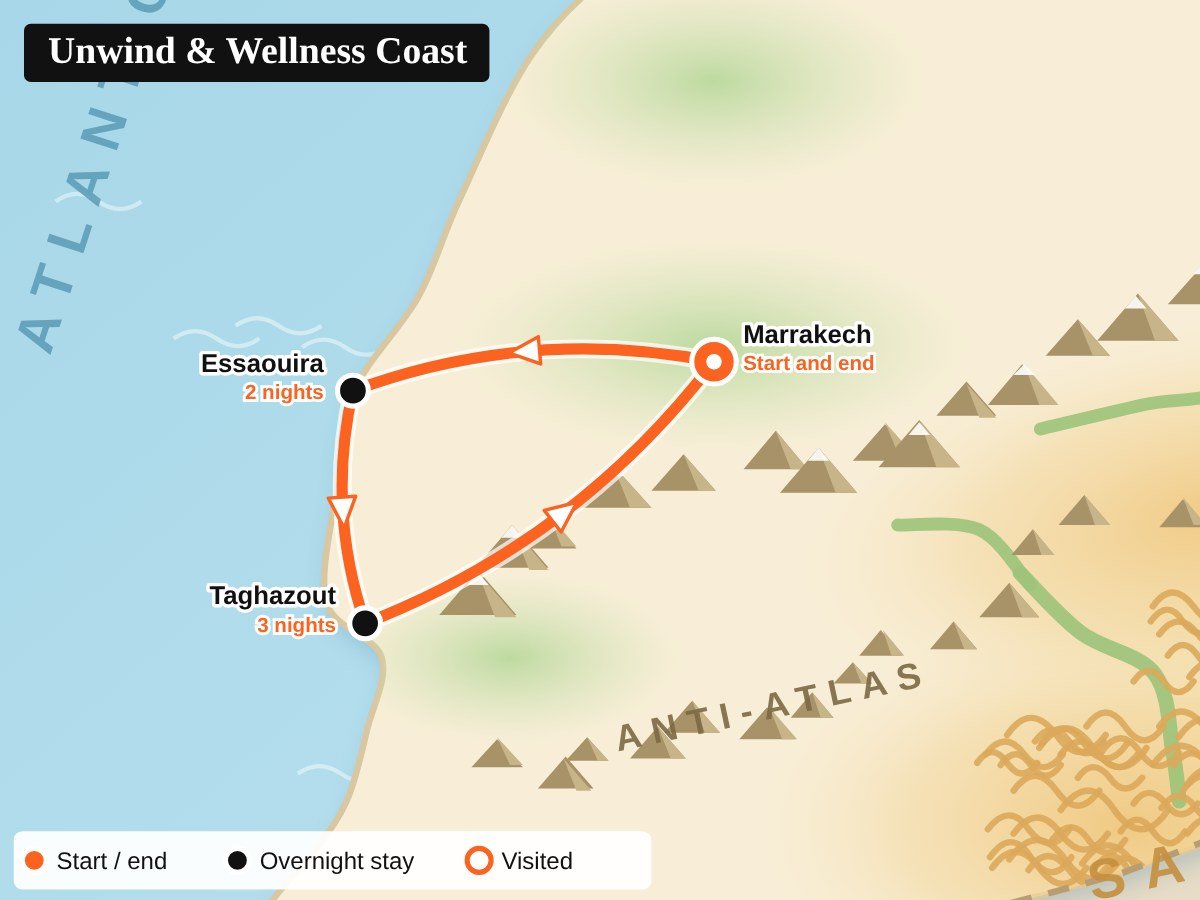
Days 1 to 3: your Morocco wellness tour from Marrakech to the coast
Day 01Marrakech to Essaouira: argan oil and a sunset harbour
Your driver meets you at the airport or your hotel in Marrakech and heads west towards the Atlantic, with a stop at an argan oil cooperative to see how the famous oil is made by hand.
You reach Essaouira in the afternoon, settle into your riad and walk down to the harbour as the sun sets behind the ramparts and the blue fishing boats.
Essaouira is relaxed and breezy, with a UNESCO-listed medina. Dinner is free to enjoy fresh fish grilled at the port or on a rooftop terrace.
Day 02Essaouira: medina walk, free time and a hammam
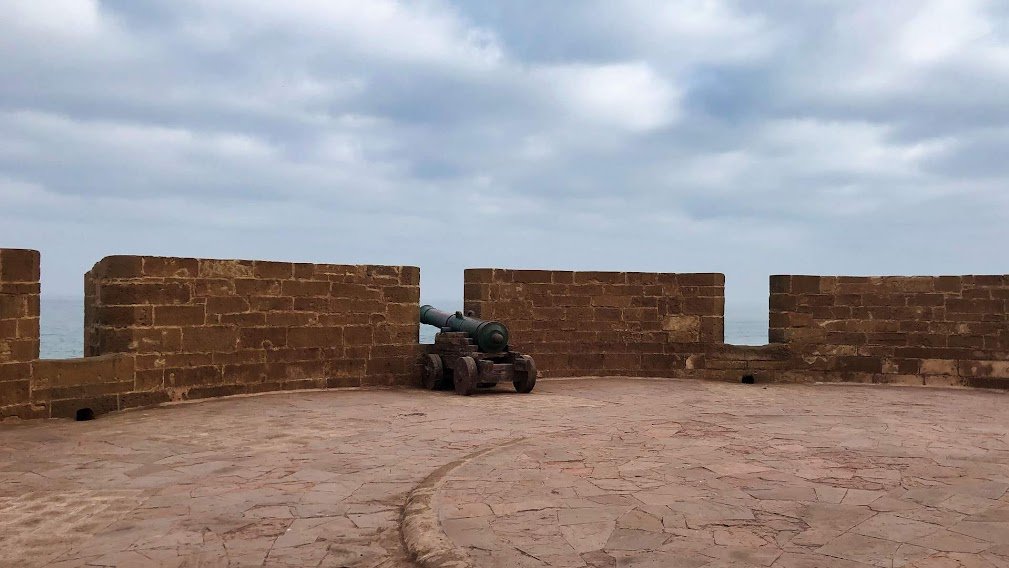
After a slow breakfast, join a local guide for a walk through the medina, along the ramparts and around the fishing port, with time for the woodworkers and art galleries.
The afternoon is yours: browse, rest on the beach or simply sit in a cafe. In the evening, unwind with a traditional hammam and scrub.
The sea breeze keeps Essaouira comfortable, so there is no need to rush. This is a day to start switching off.
Day 03Essaouira to Taghazout along the Atlantic coast
After breakfast, drive south along the coast road, passing argan groves, small beaches and cliffs, with stops wherever the view invites you to pause.
Arrive in Taghazout in the afternoon, check in to your boutique hotel and take a first walk on the beach as the light softens over the ocean.
Taghazout is a laid-back fishing village that has become a centre for surf and yoga, with a relaxed, friendly feel and wide Atlantic horizons.
Days 4 to 6: yoga in Taghazout and the return to Marrakech
Day 04Taghazout: yoga by the sea and a free day
Start the day with a yoga session, then enjoy a leisurely breakfast. The rest of the day is free for the beach, a walk along the coast or simply a book by the water.
If you want something more active, you can arrange a surf lesson or an excursion to the nearby Paradise Valley with its palm-lined pools.
There is no timetable today. The idea is to let the pace of the coast set the rhythm.
Day 05Taghazout: yoga, Agadir and a farewell dinner
Begin with a second yoga session. After breakfast, spend the day as you wish, either resting by the sea or taking a short drive to Agadir to see its kasbah and seafront.
In the evening, enjoy a farewell dinner, with fresh seafood if you like, and a last sunset on the Atlantic.
Your driver can arrange the Agadir outing at an hour that suits you, and it is optional if you would rather stay put.
Day 06Taghazout and the return to Marrakech
After a final breakfast by the sea, drive inland back to Marrakech through the argan and olive country of the Souss and over the plain to the city.
Your driver takes you to your hotel or the airport in the afternoon, with time for onward travel or a last evening in Marrakech.
The return takes around four hours, and you can break the journey for tea or lunch along the way.
Want to change a day or the pace?
Choose your group size below and tell us your dates. We will shape this journey around you.
Gallery
Moments from the journey




Where you stayAccommodation
Five nights by the sea: two in a traditional riad in the Essaouira medina and three in a boutique hotel in Taghazout, close to the beach. Exact properties are confirmed with your booking and are subject to availability.
- Essaouira: riad in or near the medina (2 nights)
- Taghazout: boutique hotel close to the beach (3 nights)
- Marrakech: transfer back at the end of the journey
Your Accommodation Experience
- 4★ Comfort – Included tour accommodation.
- 5★ Luxury – Upgrade available.
- Signature – Exclusive luxury upgrade.
Make it yoursOptional experiences
These can be added on request. They are not included in the price, are subject to availability, and we confirm the cost with you before you book them.
- Massage or spa treatment
- Surf lesson in Taghazout
- Kitesurfing or windsurfing lesson in Essaouira
- Paradise Valley excursion
- Horse or camel ride on the beach
Trip essentialsWhat to expect on the ground
Accommodation
Twin-share rooms with private bathrooms in a riad and a boutique hotel.
Transport
A private air-conditioned vehicle with an experienced driver. The drive from Essaouira to Taghazout is about three and a half hours.
Yoga and wellness
Yoga sessions are gentle and suit beginners as well as regular practitioners. Mats are provided, and the hammam is a traditional steam bath with a scrub.
Money and tipping
The currency is the Moroccan dirham (MAD). Carry cash for markets and small shops. Tipping around 10% in restaurants is usual.
Language and connectivity
Arabic and Tamazight are spoken, French is widely understood, and English is common in tourist areas. Mobile signal is good along the coast.
Time and power
Morocco is on UTC+1 for most of the year. Sockets are 220V with European two-pin plugs (types C and E).
Entry and health
Check visa rules for your passport, which should be valid for at least six months. Travel insurance is strongly recommended, and bottled water is best.
Ramadan
Ramadan 2027 is expected from around early February to early March. The tour still runs, but some restaurants close during the day. Ask us when planning.
Before you goPractical travel information
Best seasonThe coast is pleasant most of the year. Spring and autumn are ideal, and summer is cooler here than inland, though Essaouira can be windy.
What to wearLight layers, a windproof jacket for Essaouira, swimwear, sunscreen and comfortable clothes for yoga.
Activity levelEasy. Short walks, gentle yoga and plenty of rest, with two drives of three to four hours.
Good to knowDress modestly in the medinas, ask before photographing people, and carry small cash for tea and tips.
How it works
From first message to your trip
- Tell us your plansSend an enquiry with your dates, group size and what matters most to you.
- We shape your journeyWe adapt the days and the pace, then confirm the hotels and your quote.
- Confirm and unwindOnce you are happy, we confirm the details and take care of the rest, so you can simply arrive.
Pricing
Choose how you travel
All prices are per person. Pick the option that matches your group and send your enquiry in one click.
Best value
Private Tour, 8+ Travelers
4 or more twin-share rooms
$1,218USD per person€1,044 EUR
Your journey
Inclusions
Accommodation
- 5 nights in total
- Essaouira: riad in or near the medina, 2 nights
- Taghazout: boutique hotel close to the beach, 3 nights
Activities
- Guided walk through the Essaouira medina and port
- Traditional hammam with scrub
- Two yoga sessions in Taghazout
- Stop at an argan oil cooperative
Meals
- Daily breakfast and dinner
- Lunches and drinks are not included
Transport
- Private air-conditioned vehicle with an experienced driver
- Hotel or airport pick-up and drop-off in Marrakech
Destinations
- Marrakech
- Essaouira
- Taghazout
Not included
- International flights
- Lunches and drinks, unless stated in the itinerary
- Travel insurance
- Tips for your guides and driver
- Optional extras you add on request
- Personal expenses
Before you travel
Essential information
Booking and enquiry
This tour is arranged by enquiry, so there is no online checkout and nothing to pay when you first get in touch. Send us your dates, group size and what matters most to you, and we reply promptly with a tailored plan and quote. You can also message us on WhatsApp.
How it works
- Send your enquiry. Tell us your dates, who is travelling and any wishes, such as a slower pace, a particular riad or a longer stay in the desert.
- Receive your plan and quote. We adapt the days and the pace, confirm the hotels and send a clear written quote that lists what is included.
- Confirm your tour. Once you are happy with the plan and we have confirmed availability for your dates, we send you a payment link.
- Pay online by link. To secure your tour we ask for a 25% payment. The remaining balance is due one month before your tour starts. If you prefer, you can also pay in full through the same link.
- Prepare for arrival. We send your final details and stay in touch by WhatsApp or email until you arrive.
Your tour is only confirmed once we have agreed the plan with you and the payment has been received. Questions about payment, dates or changes are welcome at any point, so just ask. See the pricing options above.
Flight information
Flights are not part of the tour price. Send us your flight times when you enquire so we can plan your pick-up. If a flight is delayed, message us and we will adapt the plan.
Guest reviews
Highly rated by travellers on Tripadvisor
Tripadvisor reviews from guests who travelled with Hassan Mazoz, founder and guide.
Praised guide Hassan and driver Said, who reworked the itinerary after a delayed connecting flight.
JollynMay 2026
A hassle-free, tailor-made trip with a relaxed and professional guide.
Caryn, Stellenbosch, South AfricaOctober 2026
A group of eight found Hassan organised, patient and knowledgeable.
Mark H, Portland, USAJune 2026
A group of twelve felt well looked after, without being overloaded with information.
Sarah, Salisbury, UKJune 2026
A trip arranged at short notice, with driver, hotels, desert camp and restaurants all organised.
ns, Mount Bures, UKJanuary 2026
Found Hassan caring and knowledgeable about the land, culture and history.
Angela GMay 2026
From$1,218per person
Keep exploring
More ways to see Morocco
Marrakech Short Break
Marrakech, a luxury Agafay desert camp and Essaouira in four days. From $410 per person.
5-Day Marrakech Sahara Unwind Tour
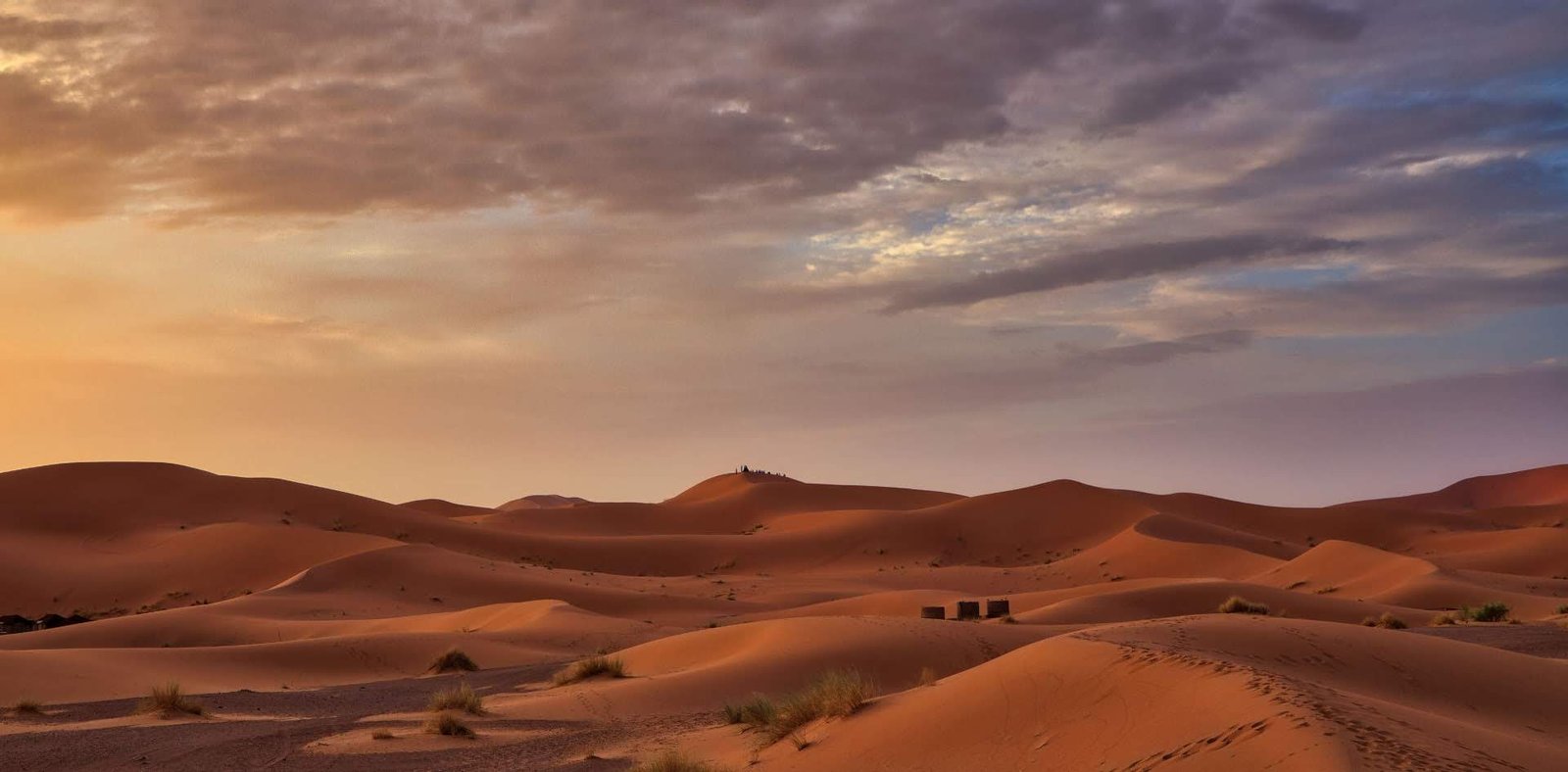
Extend your trip to the real Sahara, with a night in a desert camp. From $686 per person.
Fes and Chefchaouen Unwind
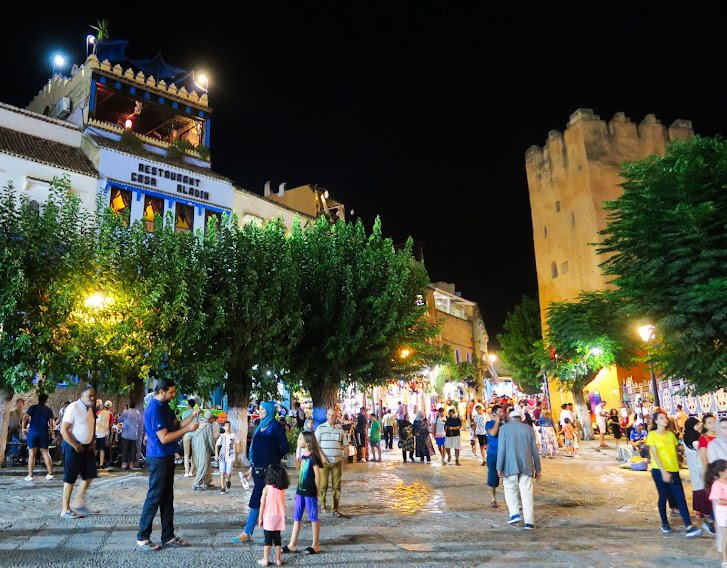
The Fes medina, Volubilis and the blue city in four days. From $401 per person.
Not sure which suits you? Customize your journey, browse all Morocco tours, or send us an enquiry.
Our Morocco wellness tour is built for travelers who want rest, sea air and a gentle pace. Read about the medina of Essaouira on UNESCO, then customize your journey or send us an enquiry about your wellness tour.
Good to know
Frequently asked questions
Where does the Unwind and Wellness Coast tour start and finish?
The tour starts and finishes in Marrakech, with airport or hotel pick-up and drop-off included.
Is the yoga suitable for beginners?
Yes. The sessions are gentle and suit all levels, from first-timers to regular practitioners. Mats are provided.
What is a traditional hammam?
A hammam is a Moroccan steam bath, usually followed by a scrub with black soap. It is relaxing and a long-standing part of daily life in Morocco.
Are meals included?
Daily breakfast and dinner are included. Lunches and drinks are not included.
Is the tour private?
Our private options give you your own driver and vehicle and let the pace follow your group. The 8+ travellers option is also fully private and is priced per person for larger parties. Contact us to discuss your preferred dates and group size.
Can I customize my Morocco Unwind tour itinerary?
Yes. We can help tailor your itinerary around your interests, travel dates and available time, including destinations, accommodation, activities, pace and the length of your stay.
What is the best time to visit the Morocco coast?
The coast is pleasant most of the year. Spring and autumn are ideal, summers are cooler than inland, and Essaouira can be windy at any time.
What should I pack?
Light layers, a windproof jacket, swimwear, sunscreen and comfortable clothes for yoga and beach walks.
What type of accommodation is used?
You stay in a riad in Essaouira and a boutique hotel in Taghazout. Your tour confirmation will detail the accommodation for each night, and upgrades to 5-star Luxury or Signature stays are available.
Is Morocco suitable for first-time visitors?
Yes. This coastal journey is a gentle introduction, with short drives and plenty of free time.
Can I book for a family or small group?
Yes. Tours can be arranged for couples, families and small private groups, and the itinerary and transportation can be adapted to the size and preferences of your group.
How can I book with Morocco Unwind?
Choose the option that matches your group and press Enquiry Now to send us an enquiry with your preferred dates, number of travelers and any special requests, and our team will help you finalize the arrangements.
From $1,218 per personView prices & enquire
- DepartureMarrakech
- Not IncludedInternational and domestic flightsTravel and medical insuranceLunches and drinksEntrance fees not mentioned in the itineraryTips and gratuities for drivers and guidesPersonal expensesOptional activities not listed in the itinerary