Morocco Uncovered
8 days
$1,269
Tour typePrivate tour
Duration8 days, 7 nights
RouteMarrakech to Marrakech
StyleRiads, kasbahs and desert camp
StaffPrivate driver
Activity levelModerate, with waterfall and valley walks
- Private tour, never a shared group
- Private driver and vehicle
- Tailor-made to your dates
- Rated 5.0 on Tripadvisor
Overview
Atlas, Sahara and sea
Looking for a Morocco Uncovered tour that goes beyond the usual stops? This private 8-day journey from Marrakech adds waterfalls, a hidden valley, the Sahara and the Atlantic coast. Morocco Uncovered is an 8-day Atlas, Sahara and Atlantic coast journey that begins and ends in Marrakech. Travel into the High Atlas to the Ouzoud Waterfalls and the green Ait Bouguemez Valley, known as the Happy Valley, then continue through the Valley of Roses at Kelaat M’Gouna to the golden dunes of Merzouga. Spend two nights in the Sahara region, one in Merzouga and one in a desert camp among the dunes, with a free day to unwind. Return through Ouarzazate and Ait Benhaddou to the Atlantic coast, where two nights in Essaouira, including a full free day, bring the journey to a gentle close.
Duration8 days, 7 nights
StartsMarrakech
EndsMarrakech
StyleRiads, kasbahs and desert camp
TransportPrivate driver
Highlights
- Ouzoud Waterfalls and Barbary macaques
- The green Ait Bouguemez Valley
- The Valley of Roses at Kelaat M’Gouna
- A free day in the Sahara at Merzouga
- Sunset camel ride and a desert camp night
- Ait Benhaddou and Ouarzazate
- Two nights in Essaouira
- A full free day by the Atlantic
Is this tour for me?
At a glance
Physical effortActive
Travel stylePrivate tour with a driver
Service levelRiads, mountain guesthouses, kasbah hotels and a desert camp
Physical ratingModerate, with waterfall and valley walks
PaceBalanced, with a free day in Merzouga and in Essaouira
Best forActive travellers who want off-the-beaten-track Morocco
Before you book
Who this tour suits
Good if you
- are active and want off-the-beaten-track Morocco, with waterfall and valley walks
- want the Ouzoud Waterfalls, the Ait Bouguemez Valley and the Valley of Roses
- want a night in Merzouga, a night in a desert camp and a free day to unwind
- like to finish by the sea, with two nights in Essaouira and a full free day
Think twice if you
- want an easy trip, as the waterfall and valley walks make this tour moderate to active
- prefer to stay in one place, as the route changes accommodation often
- mainly want cities and monuments, as this journey is about the Atlas, the Sahara and the sea
If you are a tour operator or travel agent planning a group trip, we’d love to help. Please get in touch through our Customize Your Journey form.

Day by day
Your Morocco Uncovered tour itinerary

Your route at a glance.
MarrakechStart
Ouzoud WaterfallsVisit
Ait Bouguemez1 night
Kelaat M’Gouna1 night
Merzouga1 night
Sahara desert camp1 night
Ouarzazate1 night
Ait BenhaddouVisit
Essaouira2 nights
MarrakechEnd
Your pace
Driving, day by day
- 5.5 hDay 1
- 4 hDay 2
- 4.5 hDay 3
- —Day 4
- 6 hDay 5
- 7 hDay 6
- —Day 7
- 2.5 hDay 8
Green bars are easier driving days (under 6 hours). Red bars are longer driving days (6 hours or more). Days with no bar have no driving: they are free days or time spent on site. Times are approximate.
Under 6 hours6 hours or moreNo driving
Days 1 to 4: the High Atlas and the Sahara on the Morocco Uncovered tour
Day 01Marrakech, Ouzoud Waterfalls and Ait Bouguemez
Meet your driver in Marrakech and head for the Atlas foothills and the Ouzoud Waterfalls, among the highest waterfalls in North Africa. Walk the paths beside the falls, look out for Barbary macaques and enjoy lunch with a view.
Continue into the High Atlas to the green Ait Bouguemez Valley, known as the Happy Valley, for a peaceful evening among Berber villages.
The Ouzoud Waterfalls drop in several tiers into a gorge of red rock and olive trees, and the short walk down to the base brings you close to the spray. The road into the High Atlas is long, but the scenery changes constantly, from foothill farmland to pine-covered slopes. Ait Bouguemez is a broad, green valley of barley fields and mud-brick villages, and it feels far removed from the busier tourist routes.
Day 02Ait Bouguemez to Kelaat M’Gouna
Enjoy a gentle morning walk through the valley villages and fields, then continue across the Atlas to Kelaat M’Gouna in the Valley of Roses, famous for its rose products.
Spend the afternoon at leisure among the palm groves and kasbahs.
Walking through the valley in the morning is the best way to see daily life here, with farmers working their terraced plots and children walking between villages. The drive over the Atlas passes high plateaus and dramatic gorges before reaching the Valley of Roses, where the rose harvest in spring is a local tradition and rose water and oils are sold in town. The afternoon is free for a walk, a swim if your hotel has a pool, or simply some rest.
Day 03Kelaat M’Gouna to Merzouga
Follow the Road of a Thousand Kasbahs through Tinghir and its palm grove, with a stop at Todra Gorge if time allows.
Cross the open plains to Merzouga at the edge of the Erg Chebbi dunes. Settle in and enjoy a quiet evening.
Tinghir’s palm grove is a long ribbon of green set against bare mountains, and the gorge beyond is a favourite for its sheer walls and cool river. The plains that follow are wide and empty, and the first view of the Erg Chebbi dunes at the end of the road is memorable. You arrive with time to rest, and the evening air near the dunes is calm and quiet.
Day 04A day in the Sahara and desert camp
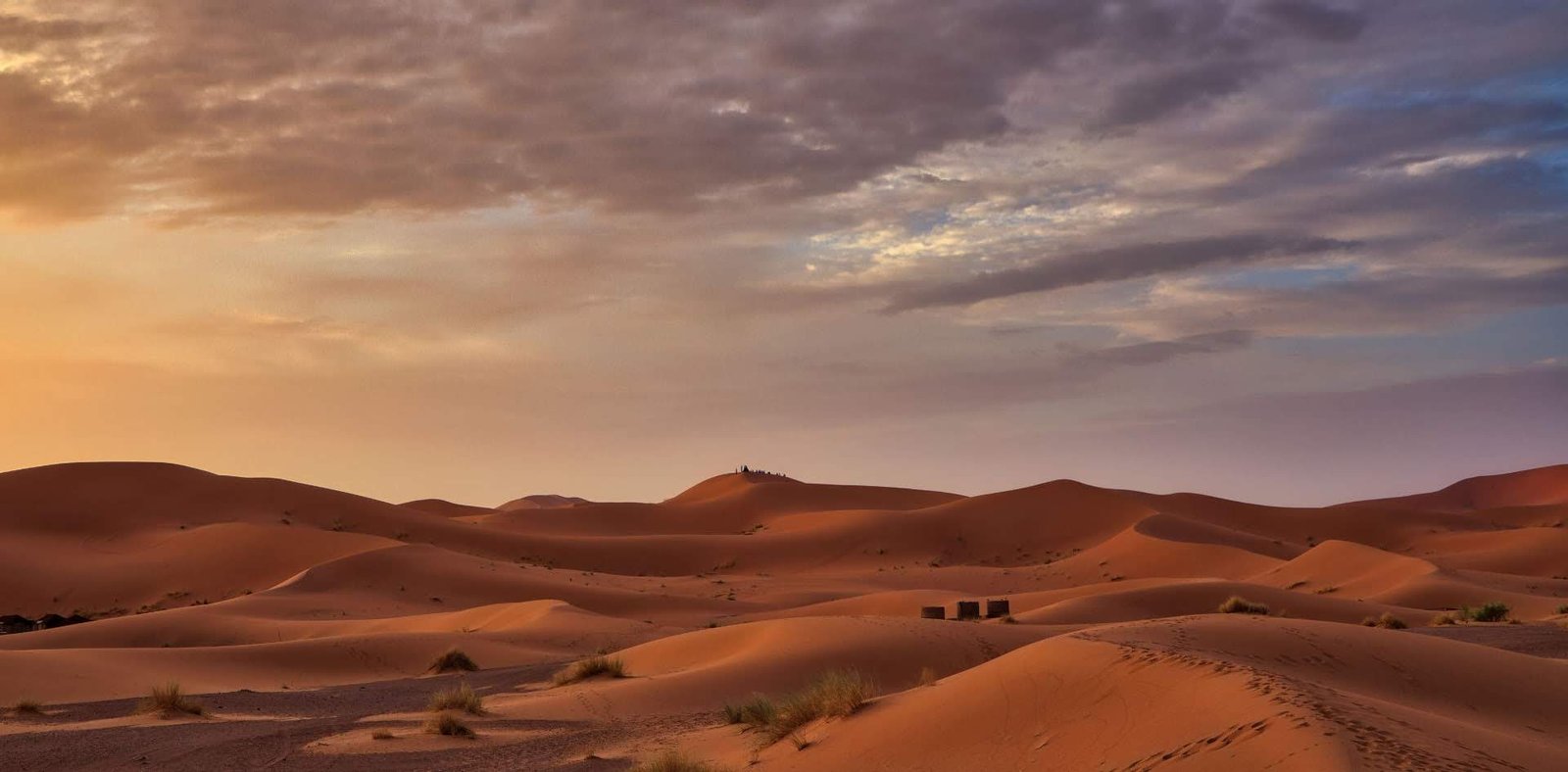
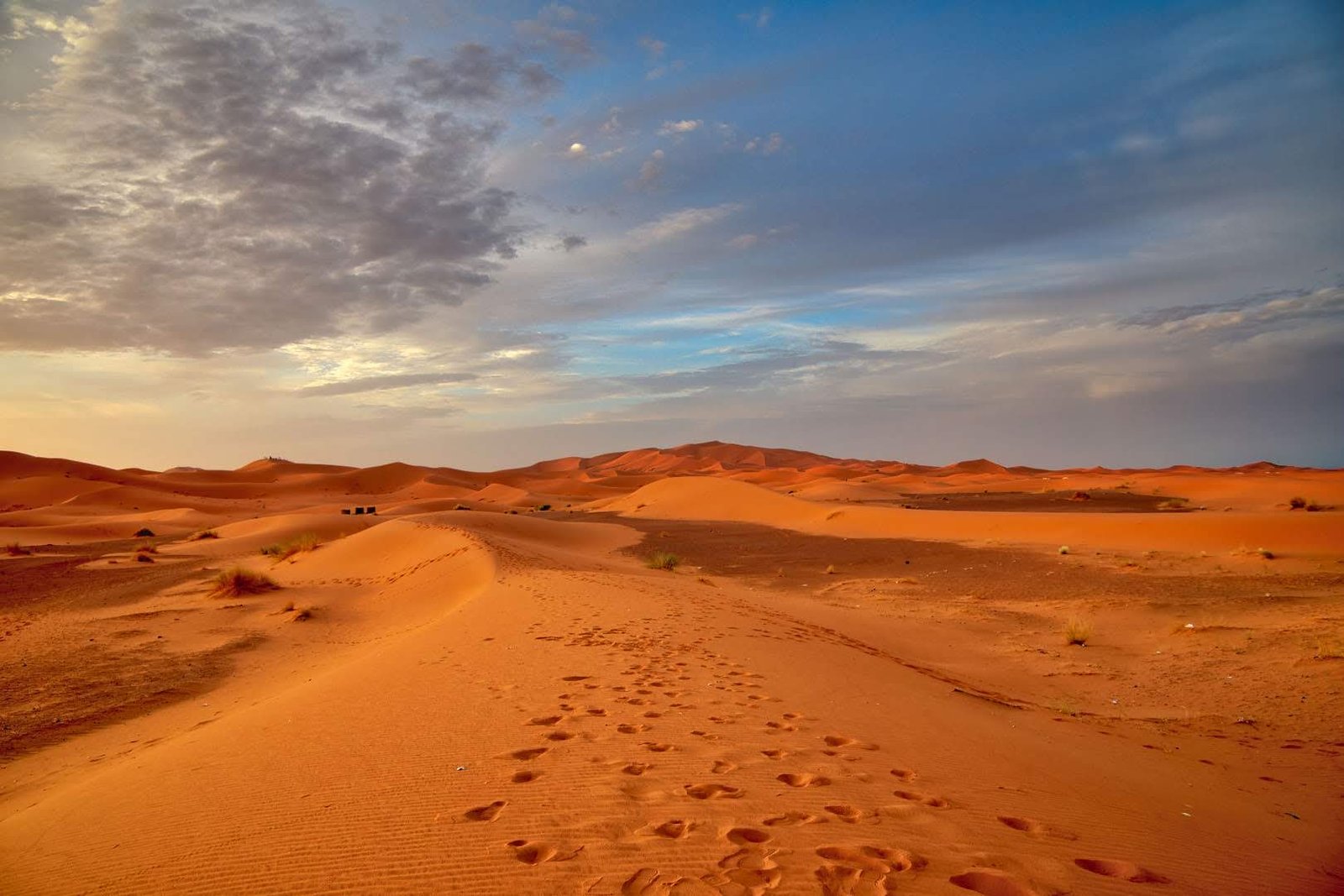
A free day in Merzouga. Relax, meet nomad families, listen to Gnawa music in Khamlia or join an optional 4×4 or sandboarding excursion.
In the late afternoon, ride camels across the dunes at sunset to your desert camp for dinner, Berber music and a night under the stars.
Khamlia is a small village near Merzouga known for the Gnawa musical tradition, and a visit gives an insight into the heritage of the southern oases. A free day also means you can choose your own rhythm, whether that is a long lunch, a walk at the edge of the dunes, or an optional activity. The camel ride at sunset is gentle and unhurried, and the camp is set among the dunes away from the lights of town.
Days 5 to 8: Ouarzazate, Essaouira and Marrakech
Day 05Desert camp to Ouarzazate
Wake for the sunrise over the dunes and ride back to Merzouga for breakfast.
Drive west to Ouarzazate, the gateway to the Sahara, and spend a relaxed evening exploring its kasbah.
Waking in the dunes at first light is one of the most peaceful moments of the journey, with the sand turning from grey to gold. The drive west follows long stretches of desert road, with the Draa and Dades areas offering stops for refreshments and photographs. In Ouarzazate, Taourirt Kasbah is a good place to see traditional earthen architecture and learn about the town’s role on the old caravan routes.
Day 06Ouarzazate, Ait Benhaddou and Essaouira
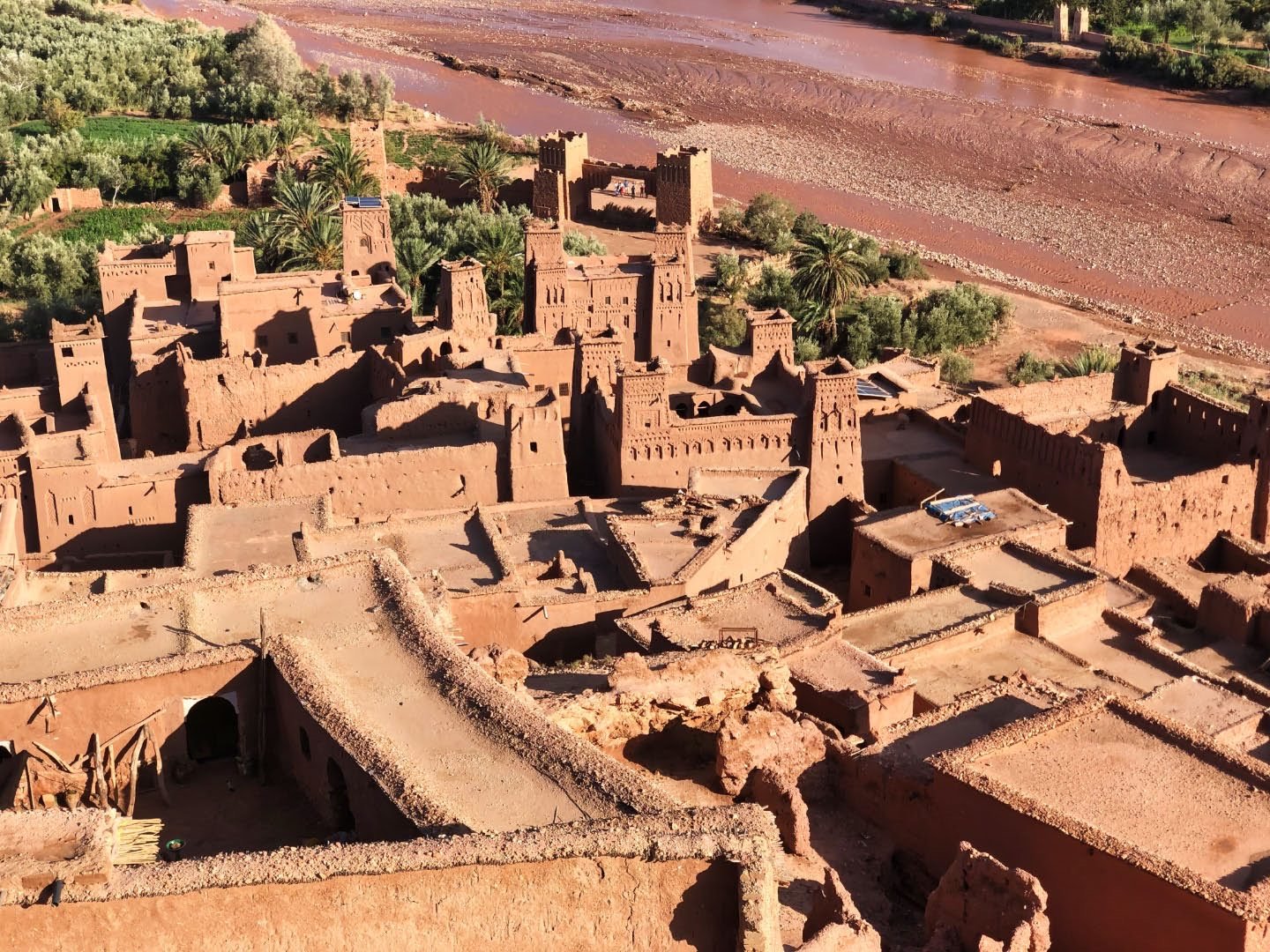
Visit the UNESCO-listed ksar of Ait Benhaddou in the morning, then cross the High Atlas by the Tizi n Tichka Pass and continue west through argan country to the Atlantic coast.
This is the longest drive of the journey, with plenty of stops for tea and views. Arrive in Essaouira in the evening.
Ait Benhaddou is at its best in the morning, with softer light on the earthen towers and fewer visitors. A guided walk up through the ksar explains how families lived behind its high walls and why the village was built on this caravan route. The crossing of the Tizi n Tichka Pass is scenic, and the argan trees of the western plains announce the approach to the coast, where the sea air brings welcome relief.
Day 07A free day in Essaouira
A free day to enjoy Essaouira at your own pace. Wander the medina, the ramparts and the fishing harbour, browse galleries and craft shops, walk the beach or enjoy a seafood lunch by the water.
Optional activities such as horse riding or kitesurfing can be arranged.
Essaouira is a town best enjoyed slowly. The medina is UNESCO-listed and full of small galleries and workshops, including the woodworkers who make objects from thuya wood. The ramparts catch the sunset, and the beach, long and windswept, is popular with locals in the late afternoon. Nothing is scheduled, so the day is yours to shape.
Day 08Essaouira to Marrakech
After a leisurely breakfast, drive to Marrakech, arriving by early afternoon.
Your driver will take you to your hotel or the airport.
The road inland from the coast passes argan woodland and small market towns, and you can stop on the way for fresh orange juice or a visit to an argan cooperative. You reach Marrakech in time to rest, enjoy a last meal in the city or continue to the airport without rushing.
Want to change a day or the pace?
Choose your group size below and tell us your dates. We will shape this journey around you.
Gallery
Moments from the journey






Where you stayAccommodation
Mountain guesthouses, a desert camp among the dunes, kasbah-style hotels and a riad by the sea, with two nights in Essaouira. Exact properties are confirmed with your booking.
- Ait Bouguemez: guesthouse in the Happy Valley
- Merzouga: hotel or guesthouse, plus a night in a desert camp with private tents
- Ouarzazate area: kasbah-style hotel
- Essaouira: riad or hotel near the medina, two nights
Your Accommodation Experience
- 4★ Comfort – Included tour accommodation.
Make it yoursOptional experiences
These can be added on request. They are not included in the price, are subject to availability, and we confirm the cost with you before you book them.
- Sandboarding or a quad ride in the Merzouga dunes
- Guided village walk in the Ait Bouguemez Valley
- Surf or kite lesson in Essaouira
- Argan oil cooperative visit near Essaouira
Trip essentialsWhat to expect on the ground
Accommodation
Twin-share rooms with private bathrooms in carefully selected riads, mountain guesthouses and hotels. The Sahara camp night is simpler, with a private tent and basic facilities.
Transport
A private air-conditioned vehicle with an experienced driver. Desert and mountain sections use the transport described in the day-by-day plan.
Guides and luggage
Local guides lead the walks and visits. Bring a daypack for hikes and an overnight bag for the desert. Sturdy walking shoes and a water bottle are essential.
Money and tipping
The currency is the Moroccan dirham (MAD). Carry cash for mountain villages, as ATMs are scarce. Tipping around 10% in restaurants is usual, and guides and drivers appreciate a tip.
Language and connectivity
Arabic and Tamazight are spoken, French is widely understood, and English is common in tourist areas. Mobile signal is patchy in the Atlas valleys and the desert.
Time and power
Morocco is on UTC+1 for most of the year. Sockets are 220V with European two-pin plugs (types C and E).
Entry and health
Check visa rules for your passport, which should be valid for at least six months. Travel insurance is strongly recommended, and bottled water is best.
Ramadan
Ramadan 2027 is expected from around early February to early March. The tour still runs, but some restaurants close during the day. Ask us when planning.
Before you goPractical travel information
Best seasonMarch to May and September to November. Summer is hot in the south; desert and mountain nights are cold in winter.
What to wearLight layers, comfortable walking shoes for the waterfalls and valleys, sun protection, and a warm layer for the dunes.
Activity levelEasy to moderate. Some walking on uneven paths at Ouzoud and in the valleys; long drives are broken up with stops.
Good to knowDress modestly in villages, ask before photographing people, and carry small cash for tea and tips.
How it works
From first message to your trip
- Tell us your plansSend an enquiry with your dates, group size and what matters most to you.
- We shape your journeyWe adapt the days and the pace, then confirm the hotels and your quote.
- Confirm and unwindOnce you are happy, we confirm the details and take care of the rest, so you can simply arrive.
Pricing
Choose how you travel
All prices are per person. Pick the option that matches your group and send your enquiry in one click.
Best value
Private Tour, 8+ Travelers
4 or more twin-share rooms
$1,269USD per person€1,087 EUR
Your journey
Inclusions
Accommodation
- 7 nights in total
- Ait Bouguemez: guesthouse in the Happy Valley
- Kelaat M’Gouna: 1 night
- Merzouga: hotel or guesthouse, plus a night in a desert camp with private tents
- Ouarzazate area: kasbah-style hotel
- Essaouira: 2 nights in a riad or hotel near the medina
Activities
- Visit to the Ouzoud Waterfalls
- Time in the Ait Bouguemez Valley
- Stop in the Valley of Roses
- Sunset camel trek, dinner and Berber music at camp
- A free day in Merzouga
- Visit to Ait Benhaddou and Ouarzazate
- A full free day in Essaouira
Meals
- 8 breakfasts
- 7 dinners, including a desert camp dinner
- Lunches and drinks are not included
Transport
- Private air-conditioned vehicle with an experienced driver
- Camel trek to the desert camp
- Hotel pick-up and drop-off in Marrakech
Destinations
- Marrakech
- Ouzoud Waterfalls
- Ait Bouguemez
- Kelaat M’Gouna
- Merzouga
- Ouarzazate
- Ait Benhaddou
- Essaouira
Not included
- International flights
- Lunches and drinks, unless stated in the itinerary
- Travel insurance
- Tips for your guides and driver
- Optional extras you add on request
- Personal expenses
Before you travel
Essential information
Booking and enquiry
This tour is arranged by enquiry, so there is no online checkout and nothing to pay when you first get in touch. Send us your dates, group size and what matters most to you, and we reply promptly with a tailored plan and quote. You can also message us on WhatsApp.
How it works
- Send your enquiry. Tell us your dates, who is travelling and any wishes, such as a slower pace, a particular riad or a longer stay in the desert.
- Receive your plan and quote. We adapt the days and the pace, confirm the hotels and send a clear written quote that lists what is included.
- Confirm your tour. Once you are happy with the plan and we have confirmed availability for your dates, we send you a payment link.
- Pay online by link. To secure your tour we ask for a 25% payment. The remaining balance is due one month before your tour starts. If you prefer, you can also pay in full through the same link.
- Prepare for arrival. We send your final details and stay in touch by WhatsApp or email until you arrive.
Your tour is only confirmed once we have agreed the plan with you and the payment has been received. Questions about payment, dates or changes are welcome at any point, so just ask. See the pricing options above.
Flight information
Flights are not part of the tour price. Send us your flight times when you enquire so we can plan your pick-up. If a flight is delayed, message us and we will adapt the plan.
Guest reviews
Highly rated by travellers on Tripadvisor
Tripadvisor reviews from guests who travelled with Hassan Mazoz, founder and guide.
Praised guide Hassan and driver Said, who reworked the itinerary after a delayed connecting flight.
JollynMay 2026
A hassle-free, tailor-made trip with a relaxed and professional guide.
Caryn, Stellenbosch, South AfricaOctober 2026
A group of eight found Hassan organised, patient and knowledgeable.
Mark H, Portland, USAJune 2026
A group of twelve felt well looked after, without being overloaded with information.
Sarah, Salisbury, UKJune 2026
A trip arranged at short notice, with driver, hotels, desert camp and restaurants all organised.
ns, Mount Bures, UKJanuary 2026
Found Hassan caring and knowledgeable about the land, culture and history.
Angela GMay 2026
From$1,269per person
Keep exploring
More ways to see Morocco
5-Day Marrakech Sahara Tour
A shorter desert escape via the Draa Valley with a camp night. From $686 per person.
8-Day Coast and Erg Chegaga Journey
The Atlantic coast, Tata and a remote desert camp. From $1,311 per person.
9-Day Family Atlas and Desert Journey
A family tour with a cycle ride, camels and a desert camp. From $1,269 per adult.

15-Day Grand Moroccan Journey
The highlights of Morocco, from the imperial cities to the dunes and the coast. From $2,735 per person.
Not sure which suits you? Customize your journey, browse all Morocco tours, or send us an enquiry.
The Morocco Uncovered tour is designed for travelers who want variety without long transfers. Learn about Ait Benhaddou on UNESCO, then customize your journey or send us an enquiry about the Morocco Uncovered tour. A shorter option is our Marrakech Short Break, and if you are travelling with children, see our 9-day family Morocco tour.
Good to know
Frequently asked questions
Where does Morocco Uncovered start and finish?
The tour starts and finishes in Marrakech, with hotel pick-up and drop-off included.
How many nights are spent in the Sahara region?
Two. The first night is in Merzouga and the second is in a desert camp among the dunes, with a free day in between to rest and explore at your own pace.
Are meals included?
Daily breakfast and dinner are included. Lunches and drinks are not included.
Is the tour private?
Our private options give you your own driver and vehicle and let the pace follow your group. The 8+ travellers option is also fully private and is priced per person for larger parties. Contact us to discuss your preferred dates and group size.
Can I customize my Morocco tour itinerary?
Yes. We can help tailor your itinerary around your interests, travel dates and available time, including destinations, accommodation, activities, pace and the length of your stay.
What is the best time to visit Morocco?
Morocco can be visited throughout the year. Spring and autumn are particularly popular because temperatures are generally comfortable. Summer can be hot in inland and desert areas, while winter offers pleasant days but cold nights in the mountains and desert.
What should I pack for a trip to Morocco?
We recommend comfortable walking shoes, lightweight clothing, sun protection and layers for changing temperatures. Bring warm layers for the Atlas and the Sahara, where nights can become cold.
What type of accommodation is used?
You stay in carefully selected riads, mountain guesthouses, kasbah hotels, a Sahara desert camp and a coastal riad. Your tour confirmation will detail the accommodation for each night.
Is Morocco safe for tourists?
Morocco is a popular international destination, and millions of visitors travel around the country each year. As with any destination, take normal precautions, stay aware of your surroundings and follow local advice.
Can I book for a family or small group?
Yes. Tours can be arranged for couples, families and small private groups, and the itinerary and transportation can be adapted to the size and preferences of your group.
How far in advance should I book?
We recommend booking as early as possible, particularly for travel during popular periods, for a better choice of accommodation, guides and preferred travel dates.
How can I book with Morocco Unwind?
Choose the option that matches your group and press Enquiry Now to send us an enquiry with your preferred dates, number of travelers and any special requests, and our team will help you finalize the arrangements.
From $1,269 per personView prices & enquire
- DepartureMarrakech
- Included7 nights accommodation in carefully selected riads, mountain guesthouses, kasbah hotels, a Sahara desert camp and a coastal riadDaily breakfast and dinnerPrivate air-conditioned vehicle with an experienced driverVisit to the Ouzoud WaterfallsTime in the Ait Bouguemez ValleyStop in the Valley of Roses at Kelaat M’GounaTwo nights in the Sahara region, one in Merzouga and one in a desert campSunset camel trek across the Erg Chebbi dunes, with dinner and Berber music at campFree day in Merzouga to explore the desert at your paceVisit to Ait Benhaddou and OuarzazateTwo nights in Essaouira with a full free dayHotel pick-up and drop-off in Marrakech
- Not IncludedInternational and domestic flightsTravel and medical insuranceLunches and drinksEntrance fees not mentioned in the itineraryOptional activities such as boat rides at Ouzoud, 4x4 excursions and sandboardingTips and gratuities for drivers and guidesPersonal expenses