
Written by Hassan Mazoz
Morocco is a rewarding country to visit with children: camels, mountain villages, medina rooftops, painted tiles, mint tea and a night under the stars in the desert. It also asks for a little more planning than a beach holiday. This Morocco family travel guide covers what parents most often want to know, from safety and health to heat, food, where to stay, how to get around and how to shape a trip that keeps everyone comfortable.
Is Morocco safe for families?
Morocco welcomes millions of visitors every year, and families are a familiar sight in Marrakech, the High Atlas and the desert. Moroccans are generally warm towards children, and it is common for shopkeepers, riad staff and drivers to make a fuss of younger travellers. As in any destination, safety comes down to current conditions and sensible habits rather than a single yes or no.
What families notice most day to day is not danger but intensity: crowded medina lanes, motorbikes squeezing through narrow streets, strong sun, persistent sellers and a lot of new sights and smells. Children can find that overwhelming at first, so it helps to build in quiet time, especially in the first two days.
Everyday safety habits that work well
- Agree a meeting point. In busy souks, tell children what to do if you get separated, and make sure older ones know the name of your riad or hotel.
- Keep contact details on them. A card or a note in a pocket with your phone number and accommodation address is simple and effective.
- Hold hands in the medina. Lanes are narrow and bikes pass quickly, so keep younger children close.
- Watch your bags. Petty theft can happen in crowded places, as in many cities. Keep valuables out of sight.
- Agree prices first. Ask about prices before accepting a service or a ride, and do not feel pressured to buy.
- Be careful with water. Never leave children unattended near pools, wells or irrigation channels.
Check official travel advice
Governments publish regularly updated advice for travellers, and it is the best place to check current conditions. Read the US State Department advice for Morocco or the UK government travel advice for Morocco, depending on where you are travelling from, and look again shortly before you fly. Advice can change, and these pages explain current security, health and entry information in full.
When you book a private journey with us, your driver-guide knows the local situation day by day, so we can adjust routes and timings if anything changes.
Health and vaccinations for children
Speak to your doctor or a travel clinic four to six weeks before you go, and tell them each child’s age. TravelHealthPro advises keeping routine vaccinations up to date, including MMR, and notes that very young children who will mix with local people may need an early MMR dose, so ask early if you are travelling with a baby. It recommends hepatitis A vaccination for previously unvaccinated travellers and typhoid vaccination for most travellers. Your clinic will tell you what suits your family.
- Water: use bottled, boiled or filtered water for drinking and for brushing teeth.
- Fruit and vegetables: wash them in safe water or peel them.
- Animals: rabies is present in Morocco. Teach children never to touch or feed stray dogs and cats, even puppies and kittens, and seek urgent medical advice after any bite or scratch.
- Fresh water: avoid paddling or swimming in rivers and streams.
- Medicines: bring any regular medicines, children’s pain and fever relief, rehydration salts, plasters and insect repellent.
- Insurance: take travel insurance that covers medical care for every family member.
Marrakech and other cities have pharmacies and clinics, and pharmacists can help with minor problems. In remote areas, such as the Atlas and the desert, services are further away, which is another reason to travel with a guide who knows the area and keeps a first-aid kit.
Heat, sun and altitude
Summer days in Marrakech and the desert can be very hot, so spring (March to May) and autumn (September to November) are usually the most comfortable seasons for families. Our Best Time to Visit Morocco guide explains each season in detail. Winter days can be pleasant, but nights in the desert and mountains are cold, so pack warm layers.
- Plan active outings for the morning or late afternoon, and rest at midday.
- Use hats, sunglasses and high-factor sunscreen, and reapply often.
- Carry a refillable water bottle for each child.
- Dress children in light, loose clothing that covers shoulders and knees, which is also respectful in the medina.
The High Atlas is cooler than Marrakech and a refreshing change. Villages such as Imlil sit well below the highest peaks, so altitude is not a concern on gentle walks. Altitude illness becomes a risk from about 2,500 metres, so if you ever plan to climb higher, ascend gradually.
Food for children in Morocco
Moroccan food is friendly to children. Many dishes are mild, and sharing from a central plate is part of the fun.
- Couscous, soft and easy to eat, usually with vegetables and chicken or lamb
- Tagines of chicken with lemon and olives, or vegetables, slow cooked and gentle in flavour
- Fresh flatbread, soups such as harira, grilled meats and omelettes
- Fresh fruit, orange juice and dates, plus pastries and sweet mint tea as a treat
Choose busy places where food is cooked fresh, and tell us in advance about allergies, vegetarians or fussy eaters so hotels and restaurants can plan around them. Simple dishes are always available if a child is not feeling adventurous.
Getting around with children
Distances in Morocco are long and mountain roads wind, so a private driver makes a real difference. You can stop when children need a break, a stretch or a toilet, and you are never tied to a timetable.
- Child seats: ask about them before you travel, because they are not guaranteed everywhere in Morocco. Tell us your children’s ages and heights when you enquire.
- Motion sickness: if a child is prone to it, bring remedies and let them sit near the front. Mountain roads have many bends.
- Shorter driving days: keep journeys to a few hours where you can, with a stop for lunch and play.
- Entertainment: download games, audio stories and films before you leave, as mobile signal can drop in mountain and desert areas.
Where to stay with kids
Riads are one of the great pleasures of Morocco: quiet courtyards, fountains and roof terraces in the heart of the medina. They are also built over several floors, often with steep stairs and open balconies, so ask about them when booking.
- Ask whether the riad has a pool, a family room or interconnecting rooms.
- Check stairs, balcony railings and roof terraces if you have toddlers.
- Consider a hotel with a pool for one or two nights, as children often welcome a swim after sightseeing.
- In the Atlas and desert, guesthouses and camps are simple but welcoming, and many children remember them best.
Activities children enjoy, by age
Toddlers and preschoolers
Keep days short and flexible. A courtyard, a fountain, a pool and a slow stroll are often enough. A buggy can be hard in medina lanes, so a carrier is often easier.
Primary school age
This is the sweet spot for Morocco. Camel rides, village walks, a cycle ride, mint tea in a courtyard, a hands-on workshop and a night in a desert camp are all within reach.
Teenagers
Teenagers often enjoy the more active experiences: a walk between mountain villages, a cycle ride, sandboarding or a dune sunrise, and the photography that comes with it.
Respectful travel with children
Morocco is a Muslim country and the culture is traditional but hospitable. Children are welcome almost everywhere.
- Dress modestly in towns and villages, and keep swimwear for the pool.
- Ask before photographing people, and teach children to do the same.
- During Ramadan, which moves earlier each year, some restaurants open later and daytime life is quieter, so plan around it.
- Learn a few words together, such as salam (hello) and shukran (thank you). Children love using them.
For more help with money, etiquette and what to pack, read our Morocco travel tips, and see our guide to the best cities to visit in Morocco to choose where to base yourselves.
A family itinerary built around children

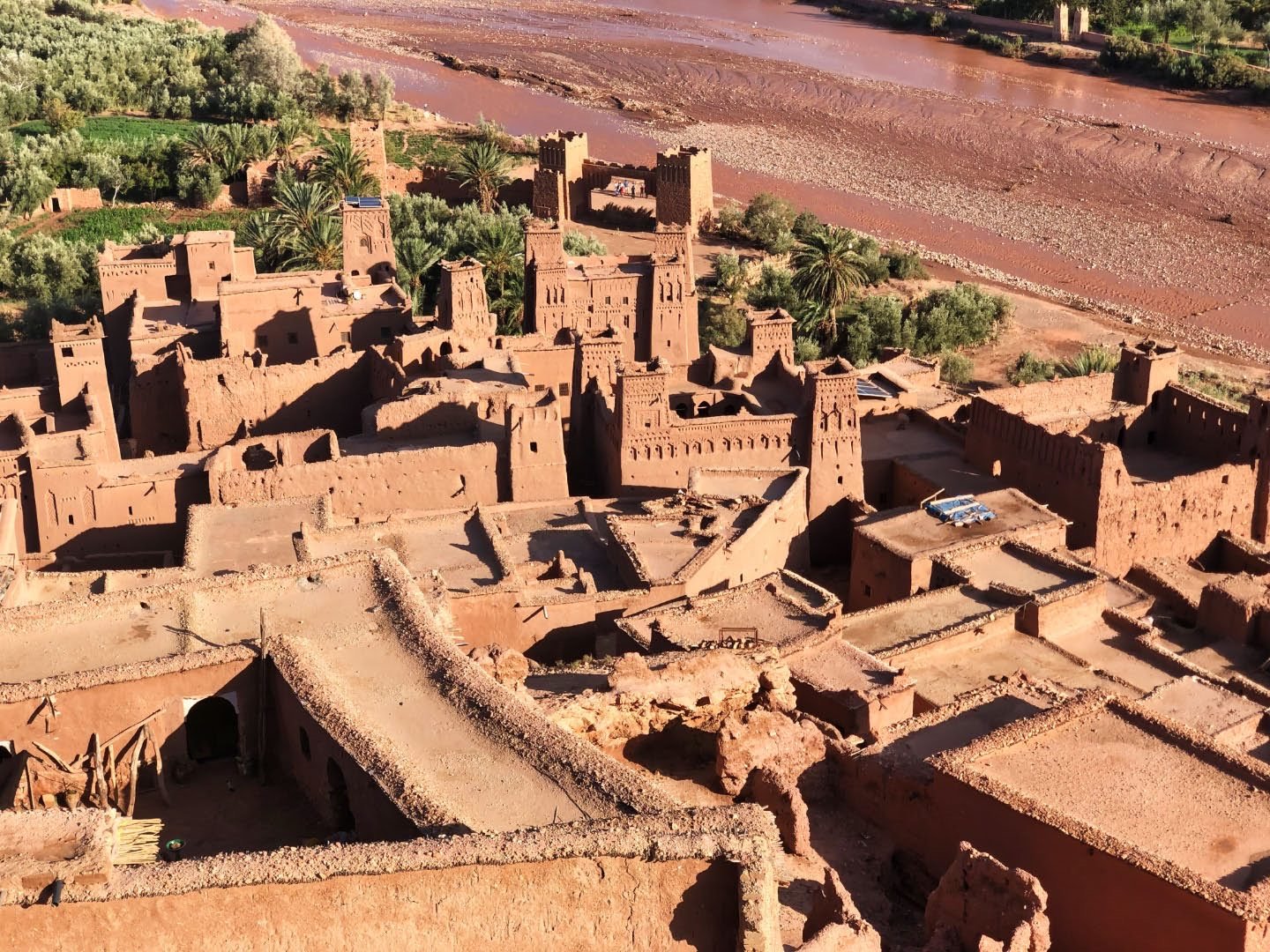
Our 9-day Family Atlas and Desert Unwind Journey is designed for families who want adventure, culture and a desert night without a rushed schedule. The route runs from Marrakech to Tighza in the High Atlas, on to Ait Benhaddou, with a cycle ride to Ouarzazate, then to the Ouled Driss desert camp and Tamnougalte before returning to Marrakech.
- A High Atlas village stay and a valley walk
- A cycle ride from Ait Benhaddou to Ouarzazate
- A night in a desert camp, with short camel rides
- Time for the children by the pool in Ouarzazate and Tamnougalte
- Meals included from day 2 to day 8, with every activity covered
Every journey is private, with your own driver-guide, so the pace and the activities can be adjusted to your children’s ages. Tell us who is travelling and we will suggest a plan.
Frequently asked questions
Is Morocco safe for kids?
Many families travel to Morocco each year and have a wonderful time. Check your government’s latest travel advice before booking, follow everyday safety habits, and travel with a driver-guide who knows the area.
What is the best age to visit Morocco with children?
Primary school age and older children often get the most from the activities, but younger children can enjoy a slower trip with plenty of rest, a pool and short drives.
Can we travel with a baby?
Yes, but plan carefully. Speak to your doctor about vaccinations and health precautions, keep days short, ask about cots and baby seats, and choose accommodation with easy access.
Is a private tour better than a group tour for families?
Many parents prefer a private tour because the pace, the stops and the activities can follow the children, and you travel only with your own family.
Quick checklist for parents
- Check your government’s latest travel advice before booking and before departure
- See a doctor or travel clinic about vaccinations
- Pack sun protection, a basic first-aid kit and any regular medicines
- Choose spring or autumn if you can
- Ask about child seats and plan shorter driving days
- Agree meeting points and keep contact details on each child
- Carry bottled water, snacks and entertainment for the road
Ready to plan? Customize Your Journey and tell us about your family, or see our 9-Day Family Atlas and Desert Unwind Journey, or send us an enquiry.
Official advice and health guidance change. Check the sources linked above for the latest information before you travel.