
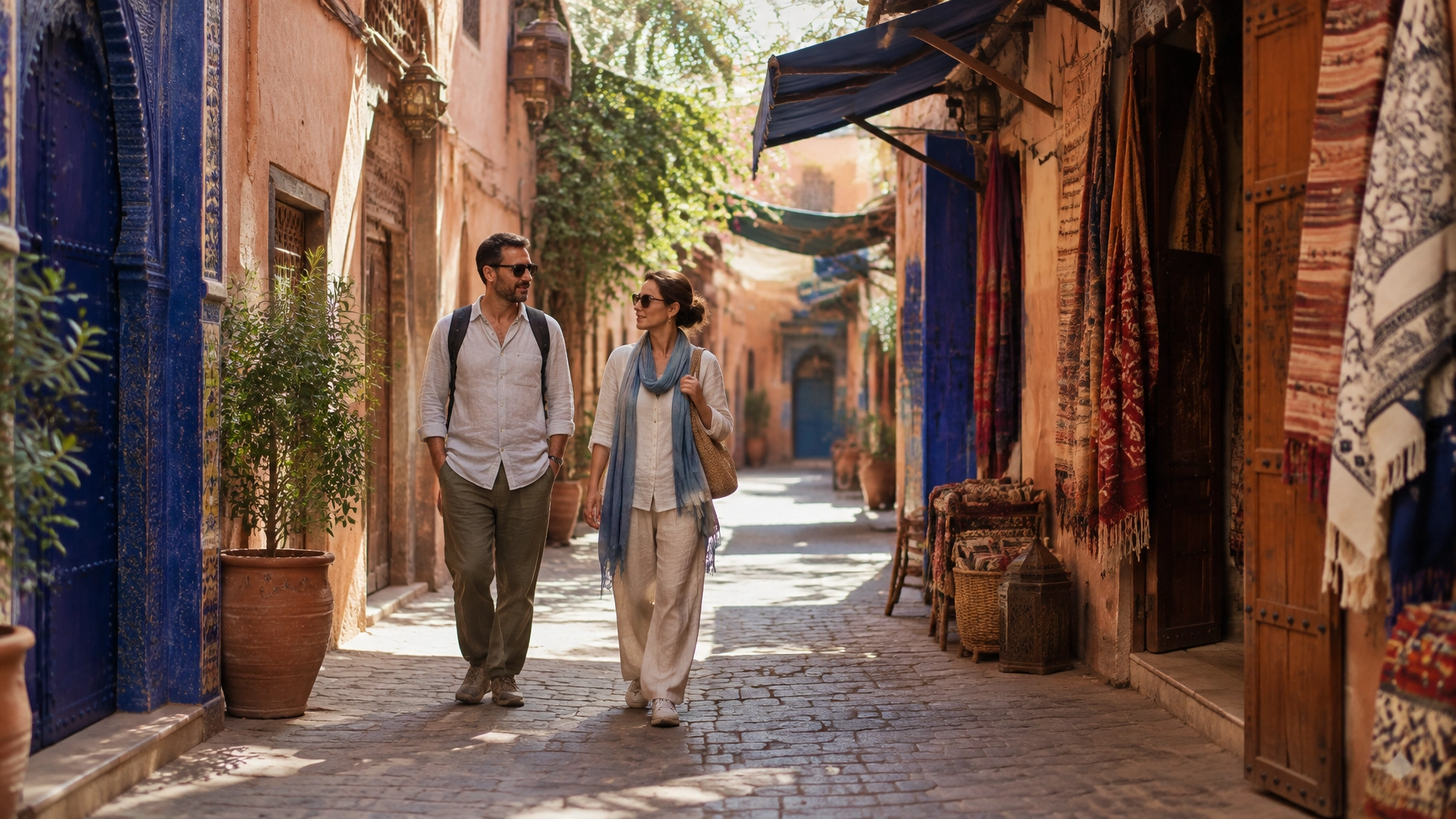
When travellers ask me what to wear in Morocco, I tell them to think about two things: comfort and respect. You do not need a special wardrobe, and nobody expects visitors to dress in traditional Moroccan clothing. A few easy choices will help you feel at ease in the medinas, on the road and outdoors.
As a local guide, I see how much the right layers matter on a journey that moves from warm city streets to mountain villages and cool desert evenings. Here’s a practical guide to help you pack for the places and season you have in mind.
The short answer
For everyday sightseeing, choose loose, breathable clothes that cover your shoulders and reach roughly to your knees. A light scarf, sun protection and comfortable walking shoes are useful additions. Swimwear is fine at a pool or beach; cover up when you leave that area. Pack layers, because temperatures can change between regions and after sunset.
The general rule: comfortable and considerate
There is no single Morocco dress code for tourists. In larger cities such as Marrakech, you will see a wide range of clothing. A simple, versatile choice for medinas, villages and historic sites is to cover your shoulders and knees, and choose clothes that are not too tight or transparent.
Lightweight cotton and linen are comfortable in warm weather. Loose clothes also offer useful sun protection, so covering up does not have to mean feeling hotter. You do not need to wear a headscarf or traditional dress as part of everyday sightseeing.
The atmosphere varies between places. In the livelier parts of the Marrakech medina, visitors and local residents dress in many different ways. In a small village, a little more coverage is a considerate choice. Think of it as a useful adjustment to your surroundings, not a strict rule.

Colourful scarves and clothing in a covered market lane in Fes.
What women should wear in Morocco
For exploring cities and travelling between them, pack loose trousers, a maxi or midi skirt, or a light dress. Tops with sleeves are easy to wear in most settings. A thin overshirt or cardigan gives you an extra layer when you want one.
A light scarf is handy, but it is not a day-to-day requirement for covering your hair. I often suggest carrying one for sun or wind, or when you would like extra coverage. It can also be useful on dusty roads, though a light scarf will not replace proper sun protection.
You do not need to cover your hair in public. For religious sites, check the rules before you visit. Non-Muslim visitors generally cannot enter active mosques, with the notable exception of guided visits at Hassan II Mosque in Casablanca. Its visitor rules apply, so check the official Hassan II Mosque Foundation before going.
Swimwear is fine at a hotel pool or on the beach. When you leave the pool or beach area, put on a cover-up or other clothes.
What men should wear in Morocco
For men, T-shirts, linen shirts, jeans, chinos and lightweight trousers all work well. Knee-length shorts are generally comfortable in relaxed city, resort and beach settings. Longer shorts or trousers are a more versatile option for medinas, villages, religious sites and dinners.
Keep swimwear for the pool or beach, and wear a shirt when walking around public streets. Breathable fabrics and a light layer will serve you better than packing only heavy clothes or formal outfits.

Light, practical clothing offers sun protection on a camel trek across the Erg Chebbi dunes near Merzouga.
What to wear by season and region
Morocco’s weather changes with the landscape. Spring in Marrakech can feel very different from a winter evening in the Rif or a night in a desert camp. Check the forecast for each stop on your route, not just the arrival city.
| Season | What to pack |
|---|---|
| Spring and autumn | Light daytime clothes, a cardigan or jacket for evenings, and a sun hat. Add warmer layers if your route includes the mountains or desert. |
| Summer | Loose, light-coloured clothing, a hat, sunglasses and sunscreen. A light layer can be useful for cool evenings, coastal wind or air-conditioned spaces. |
| Winter | A proper coat or warm jacket for the north and cities, plus a waterproof or wind-resistant layer. Bring warmer clothes for the Atlas and cold desert nights. |
In summer, Marrakech and Fes can be very hot, while the Atlantic coast is often breezier. Around Chefchaouen, the Rif Mountains can feel cool or wet, particularly in winter. In the High Atlas, bring warm layers and rain protection; at higher elevations, conditions can be cold.
The Sahara is not always warm after dark. Even when the afternoon is sunny, a warm layer is welcome in camp. For spring and autumn trips that combine cities, mountains and dunes, packing clothes you can layer is more useful than bringing several heavy outfits.

In the High Atlas, dress for changing mountain weather rather than relying on the temperature in Marrakech.
Footwear and practical items
Medinas have uneven paving, steps and narrow lanes. Choose comfortable walking shoes that stay secure on your feet. For a full day exploring, they are usually more useful than sandals.
The steep lanes of Chefchaouen and the sandy ground around Merzouga are good reasons to leave delicate shoes at home. Sandals are useful for relaxed evenings at your riad or desert camp, but they are not a substitute for walking shoes on longer outings.
A short what to pack for Morocco checklist:
- Comfortable walking shoes with a bit of grip
- Sandals or flip-flops for the pool or riad
- Sun hat, sunglasses and sunscreen
- A light scarf and a small day pack
- A warm layer for mountain and desert evenings

Chefchaouen’s sloping, stepped lanes are easier to explore in comfortable shoes.
Special situations
Mosques: Most active mosques are not open to non-Muslim visitors. Hassan II Mosque in Casablanca offers guided visits; follow the current visitor guidance and dress requirements. If you are unsure about another site, ask before entering.
Hammams: Clothing and customs vary between a traditional public hammam and a hotel or riad spa. Ask the hammam what to bring and what to wear. A private spa may offer a different experience from a local public bath.
Desert camp: Choose comfortable clothes for the camel ride and walking on sand. A warm layer is useful after sunset, and closed shoes are easier for crossing dunes than open sandals.
Dinner: A rooftop restaurant or riad terrace rarely calls for formal clothing. Smart-casual clothes are enough; a clean shirt, dress or relaxed evening outfit will feel appropriate.
Where to buy clothes in Morocco
If you forget something, you can look for a scarf, shirt or other basics in local markets and shops. In tourist areas, you may also find shops with set prices. Ask the price before buying, and take your time choosing.
A light scarf or a djellaba can be a practical souvenir as well as a way to try local clothing. If you buy a djellaba, choose one that suits the season: fabrics and weights vary.
Planning the practical side? Read our guide to staying safe in Morocco, and see how to choose a Merzouga desert camp for your night in the Sahara.
Frequently asked questions
Do women have to cover their hair in Morocco?
No. Women do not generally need to cover their hair in public. A scarf can be useful for sun, wind or extra coverage, and you should check the rules at any religious site you plan to visit.
Can you wear shorts in Morocco?
Yes, shorts are commonly worn in some city, beach and resort settings, particularly by men. Longer shorts or trousers are a more adaptable choice for medinas, villages, religious sites and dinners.
What should you not wear in Morocco?
There is no universal list of banned tourist clothing for everyday sightseeing. Very revealing or transparent clothes may feel out of place in medinas, villages and religious settings, so choose something more covering for those visits.
What do tourists wear in Marrakech?
Tourists in Marrakech wear a range of outfits. Loose trousers, breathable tops that cover the shoulders and comfortable shoes are practical for walking through the medina, especially in warm weather. Our guide to things to do in Marrakech covers what to see once you are dressed for the day.
Is there a dress code for a desert camp?
There is no special dress code for an ordinary desert camp stay. Wear comfortable clothes for the dunes, protect yourself from the sun, and bring a warm layer for the evening.
What shoes should I wear in Morocco?
Comfortable walking shoes with a secure fit are a good choice for medinas and uneven lanes. Add sandals for the pool or riad, and choose closed shoes for desert walks if you prefer to keep sand off your feet.
What to wear in Morocco comes down to packing for the places you will visit, with a little room for changing weather and local customs. For a slower journey from the north to Marrakech, explore our 12-Day Tangier to Marrakech Comfort Unwind Journey, or read our guides to 10 days in Morocco and the 7-day Morocco itinerary. If you are planning a different route, design your own Morocco journey. Tell us your dates and preferences, and we can send a tailored plan promptly by WhatsApp.