

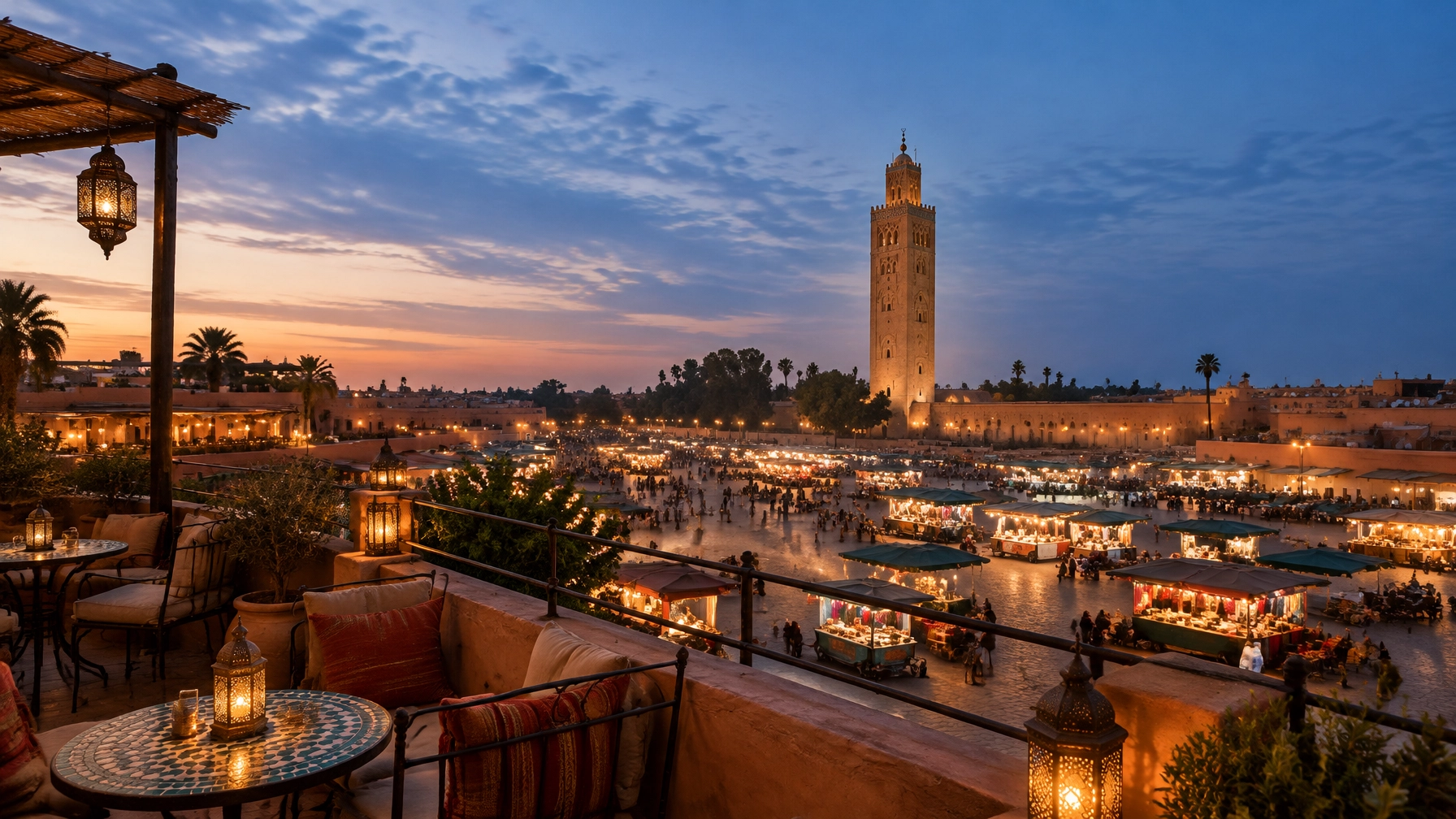
Jemaa el-Fnaa at dusk, seen from a rooftop terrace with the Koutoubia minaret beyond.
A local's guide to the best things to do in Marrakech, Morocco: what to see in the medina, the souks and Jemaa el-Fnaa, day trips to the Atlas Mountains and Essaouira, and how to enjoy the city at a relaxed pace.
Marrakech is intense by design: busy lanes, vivid colours, the call to prayer and the evening theatre of Jemaa el-Fnaa. The city can feel overwhelming if you try to see every sight in a day, but it becomes more rewarding when you give it room.
If you’re wondering about the best things to do in Marrakech, this local guide focuses on what’s worth your time, when to visit and how to enjoy the medina without rushing. One major sight, a good lunch and an unplanned wander can make a better day than a long checklist.
The Marrakech attractions worth slowing down for
Jemaa el-Fnaa at dusk
The square changes as the afternoon fades. Food stalls begin to serve, musicians gather and storytellers draw a crowd. For a calmer view, watch the scene from a rooftop café rather than trying to take it all in from the middle.
You can visit in the morning, too, when the square is quieter. If you eat at a stall, check the price before ordering. Keep your belongings close in the evening crowd, and ask before photographing performers.
Koutoubia Mosque
The Koutoubia’s minaret is one of the city’s most recognisable landmarks. Walk around the gardens and open spaces nearby, especially in the softer light of late afternoon. Non-Muslim visitors cannot enter the mosque, so treat it as an exterior visit.
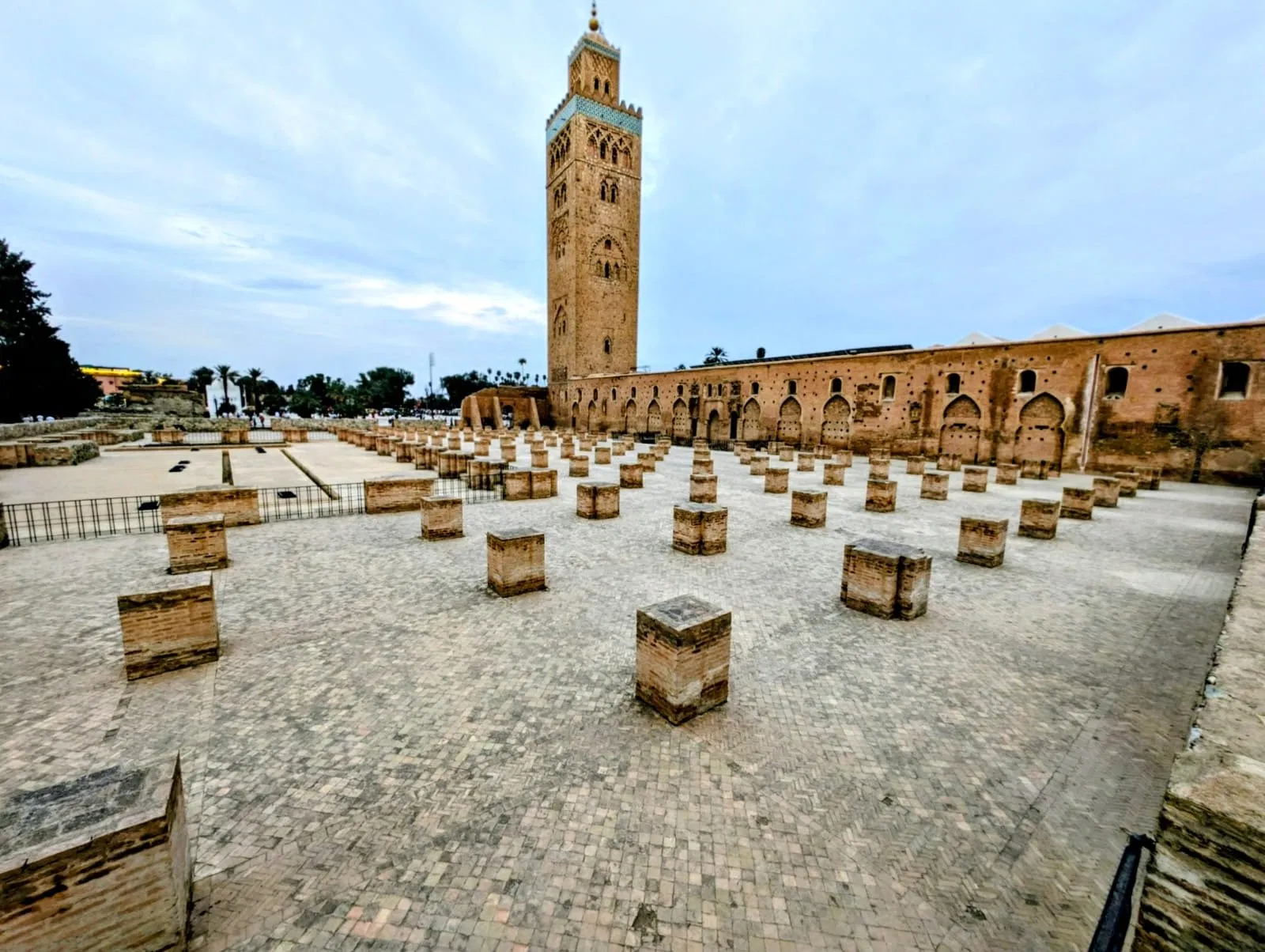
The Koutoubia minaret above its gardens; non-Muslim visitors view the mosque from outside.
Bahia Palace
Bahia Palace is best visited near opening time, before the courtyards fill. Allow about an hour to look around the tiled floors, carved plaster, painted ceilings and quieter corners.
Opening hours and entry arrangements can change, so check before you go. The official Moroccan Ministry of Culture ticket portal is a useful place to confirm current details.
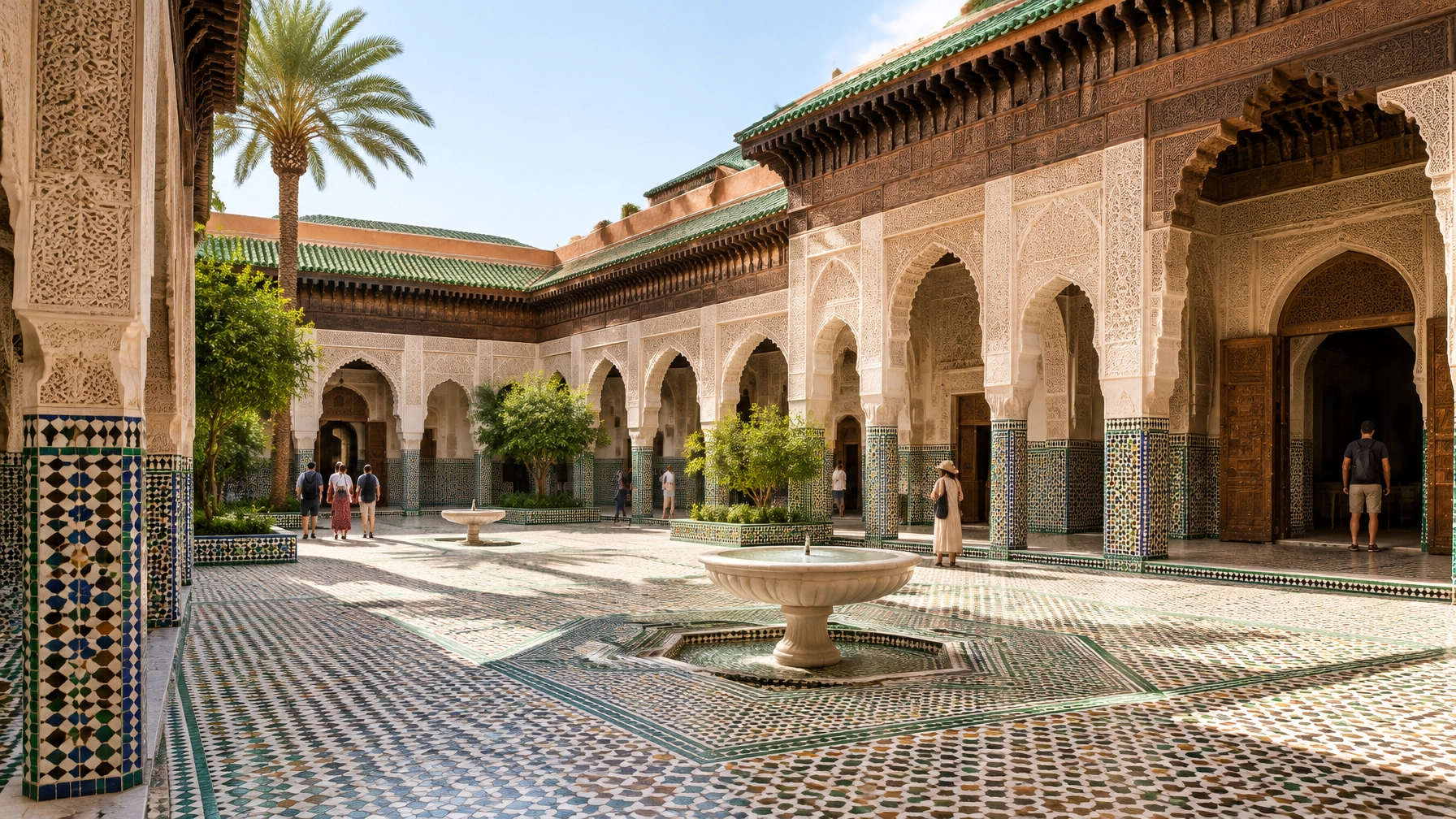
Zellige tilework and carved arches in a palace courtyard; Bahia Palace is best near opening time.
Ben Youssef Madrasa
This former school is a beautiful place to pause and notice the details: zellige tilework, carved cedar and the central courtyard. It’s more rewarding if you take your time rather than trying to photograph every angle.
The official Ben Youssef Madrasa website lists opening hours and entry information. Check it before your visit, as ticket arrangements can change.
Saadian Tombs
Near the Kasbah, the Saadian Tombs are a compact, finely decorated historic site. They are worth including if you enjoy architecture and have time to visit at an unhurried pace. Go earlier in the day if you can, as queues may form.
Choose one garden
If you want a quieter break from the medina, choose either Le Jardin Secret or Majorelle Garden rather than trying to fit both into a packed day.
Majorelle is popular, so book a timed ticket in advance through the official Jardin Majorelle website and aim for an early slot. Le Jardin Secret is a convenient alternative inside the medina when you want a garden visit without travelling across town.
Beyond the sights: souks, food and slower moments
Explore the souks without trying to cover them all
The medina’s souks are a network of working lanes, workshops and shops. Pick an area or craft that interests you, then leave time to browse. You don’t need to walk every alley to feel the atmosphere.
Bargaining is common in many stalls. Keep it friendly: ask the price, make a reasonable counter-offer if you’re interested, and be prepared to move on politely if it doesn’t feel right. For a more straightforward purchase, look for fixed-price shops or cooperatives where the prices are clearly displayed.
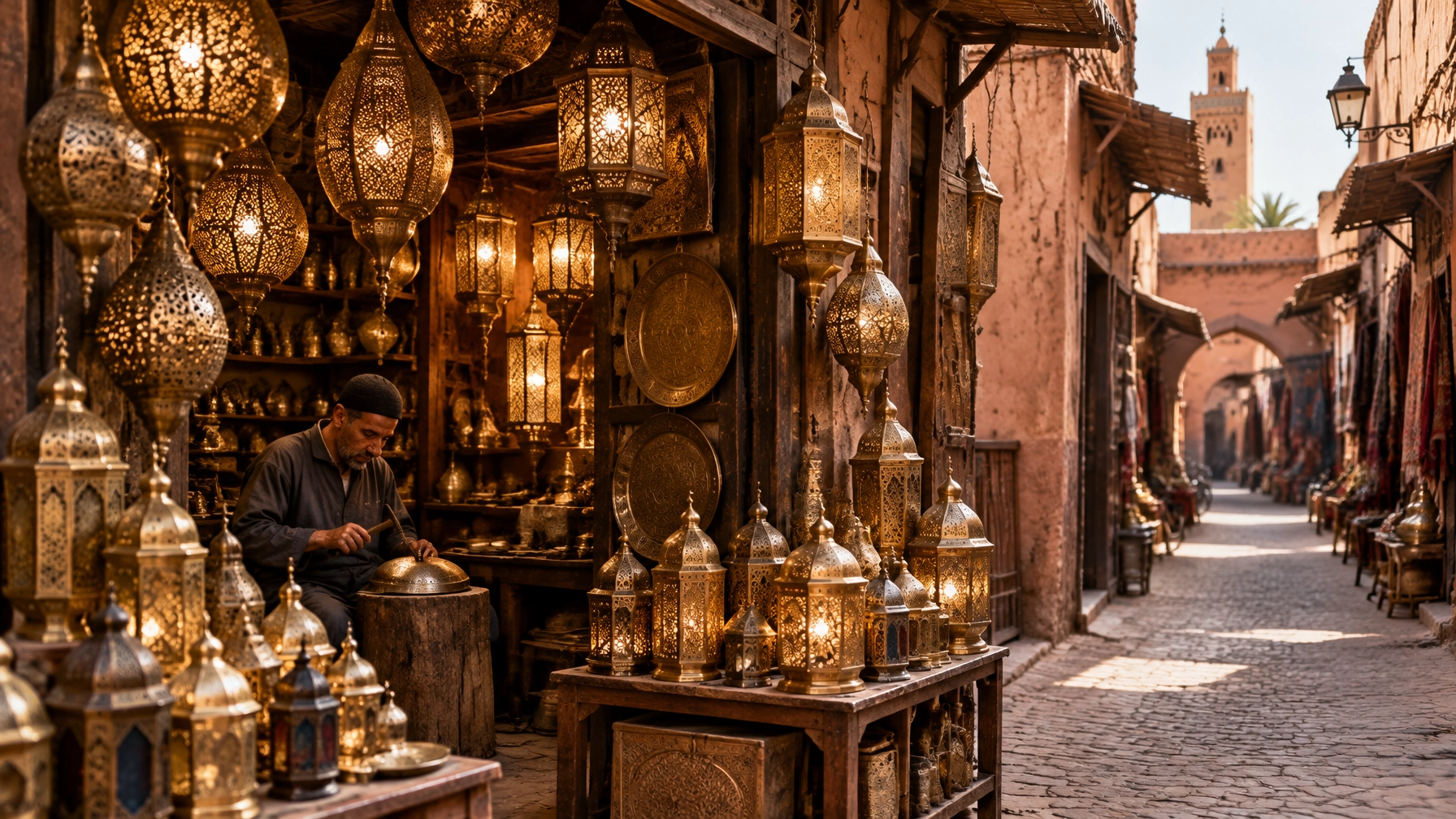
An artisan at work among brass lanterns in the souks north of Jemaa el-Fnaa.
Try a hammam
A traditional neighbourhood hammam is a local bathing ritual, while a tourist spa usually offers a more private, guided treatment. Both can be enjoyable; choose based on how much guidance and privacy you’d like.
If you book a traditional hammam, ask what to bring and what is included. A spa or your riad can explain the process beforehand if it’s your first visit.
Eat at a pace that suits you
For a lively evening, browse the food stalls around Jemaa el-Fnaa and choose one where food is being cooked fresh and there is a steady flow of customers. Rooftop cafés offer a quieter setting and a view over the rooftops. A cooking class is another good way to learn about Moroccan ingredients and dishes.
At the table, try a tagine or harira, and take time over mint tea. If you have dietary needs, explain them clearly when ordering.
Look beyond the headline sights
Marrakech has artisan workshops and leather-working areas, but you don’t need to seek out a tannery to appreciate the city’s crafts. If one interests you, ask your riad or a trusted local guide whether it is appropriate to visit and what to expect.
For a quieter end to the day, return to your riad courtyard. A cup of tea and a little stillness can be as memorable as another monument.
Day trips from Marrakech
The mountains, coast and desert all make possible excursions from the city. Drive times below are approximate one way; traffic, stops and mountain roads can add time.
| Trip | Approximate drive | Best for |
|---|---|---|
| Agafay | 45–60 minutes | A sunset outing and stony desert scenery |
| Ourika Valley | About 1–1.5 hours | A green valley and riverside villages |
| Imlil | About 1.5 hours | Mountain views and a guided village walk |
| Essaouira | About 2.5–3 hours | A full day by the Atlantic coast |
| Ouzoud Waterfalls | About 2.5–3 hours | Waterfalls and a long day outdoors |
Imlil is a lovely choice if you want a walk in the High Atlas. Go with a local guide and allow a full day rather than squeezing it between city visits.
Essaouira is also possible as a day trip, but the return drive makes for a long day. For Ouzoud, take time to walk around the falls and wear shoes with a good grip. Agafay is the closest option if you’d like an evening outside the city without a long journey. It is a rocky landscape, not the Sahara’s sand dunes.
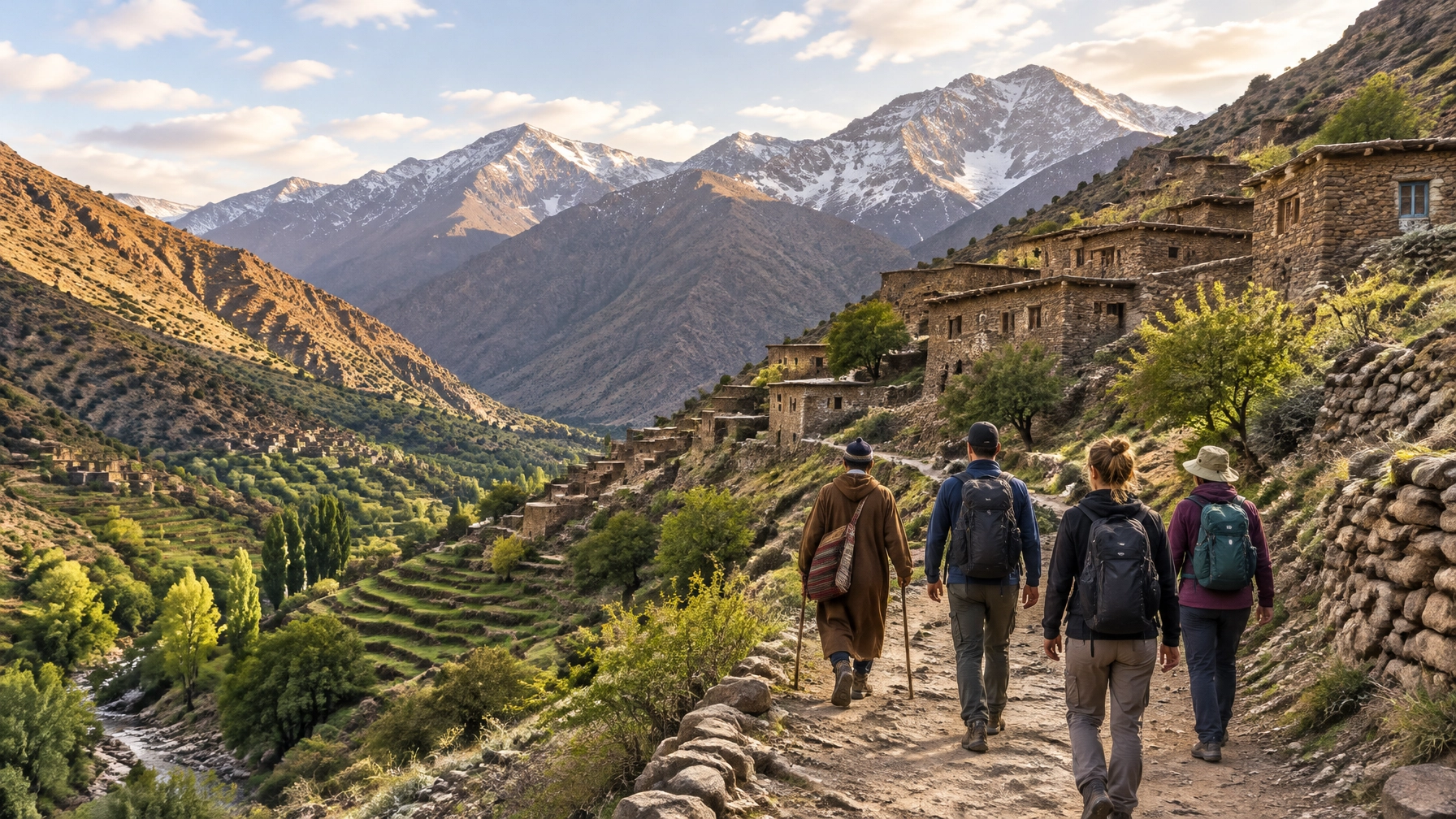
A guided village walk on a mountain path near Imlil in the High Atlas, about 1.5 hours from Marrakech.
When to visit Marrakech
October to April is generally the most comfortable period for walking around the city. Spring and autumn bring pleasant sightseeing weather, while winter days can be mild and evenings cool. Pack a warm layer for nights from December to February.
Summer can be very hot. Plan outdoor sights for early morning or later in the day, take a long midday break in the shade, and save the souks and square for the evening. During Ramadan, daily rhythms and opening hours may differ, so check locally before planning a tightly timed day.
Staying in the medina
A riad is a traditional house arranged around an inner courtyard. Staying in one gives you a calm place to return to after the busy lanes, often with a shaded courtyard or terrace for breakfast and rest.
The medina is largely pedestrian, and some riads sit down narrow lanes that are not easy to find on your first visit. Save the address offline and ask your accommodation where your driver should drop you. If you have heavy luggage, ask whether a porter can meet you nearby.
Practical tips for a comfortable visit
- Dress respectfully: light clothing that covers shoulders and knees is a considerate choice, particularly near religious sites.
- Carry cash: cards are useful in many hotels and larger shops, but small stalls and cafés may prefer Moroccan dirhams. Keep some small notes for everyday purchases.
- Ask before taking photos: check with people, performers and artisans before photographing them.
- Decline unwanted help politely: if someone offers an unsolicited tour or says a lane is closed, a calm “no, thank you” is enough. If you want a guide, arrange one through your accommodation or a trusted operator.
- Expect a different rhythm on Fridays: some shops may be quieter around Friday prayers. Don’t assume every business will follow the same schedule.
Frequently asked questions
How many days do you need in Marrakech?
Three days gives you time for the main sights, souks, a garden and a slower meal or hammam without trying to do everything at once. Add a day if you want a day trip.
What are the must-sees in Marrakech?
Start with Jemaa el-Fnaa, the Koutoubia Mosque exterior, Bahia Palace and Ben Youssef Madrasa. Add the Saadian Tombs or one garden if they suit your interests.
If ten days in Morocco is your plan, our realistic 10-day Morocco itinerary shows where Marrakech fits in a private route from Casablanca to the Sahara.
Is Jemaa el-Fnaa safe at night?
It is a busy public square with many visitors, but keep your belongings secure and stay aware of your surroundings. Agree prices before ordering food or taking photographs, and use well-lit, familiar routes back to your accommodation.
What should I wear in Marrakech?
Light, comfortable clothing that covers your shoulders and knees is a respectful choice. Comfortable walking shoes are useful on uneven medina lanes, and a light layer helps on cooler evenings.
What is the best day trip from Marrakech?
Choose Imlil for a High Atlas walk, Essaouira for the coast, or Agafay for a short desert outing. The best option depends on how much time you want to spend driving.
Is Marrakech worth visiting?
Yes, especially if you enjoy architecture, food, markets and city life. It can be intense, but allowing time to rest and explore at your own pace makes a real difference.
The best things to do in Marrakech are not always the ones you can tick off a list. Give the city time to surprise you, and choose a few experiences that genuinely interest you.
For more local ideas, see our Marrakech destination guide. If you’re travelling beyond the city, explore our 12-day Tangier to Marrakech journey or desert tours from Marrakech. We can also design a private journey around your dates and pace and send a tailored plan promptly via WhatsApp or email.